
Top 5 most read articles of EuroFinance in 2025

EuroFinance’s year-end review of 2025 looks at how treasury responded to geopolitical tension and accelerating AI adoption across core functions.
1) How generative AI and upskilling are reshaping the workforce of tomorrow

Generative AI is reshaping organisational structure, creating demand for new digital skills and redefining how treasury teams operate. Automation is reducing manual workloads while elevating analytical and strategic roles. Companies that embraced continuous upskilling gained significant productivity advantages.
2) Cryptocurrency gains traction in corporate boardroom

Once viewed with scepticism, crypto entered formal treasury discussions this year. The early corporate pilots in payments, liquidity management and tokenised assets. While volatility remains a barrier, interest surged as regulatory visibility improved and use cases became more operational than speculative.
3) Future of finance: CBDCs and a new era for money and global transactions

A shift toward central bank digital currencies gathered momentum, with several markets moving beyond pilot stages. CBDCs could streamline settlement, reshape payment infrastructure and alter liquidity management. For treasury, the transition signals the beginning of a multi-rail monetary system.
4) Are stablecoins really reducing friction in payments?
Corporates are experimenting with stablecoins for settlement speed, cost efficiency and cross-border transactions. While many firms report faster payment cycles, the regulatory uncertainty and liquidity limitations continue to be barriers. Stablecoins show promise but require clearer frameworks before they can be fully integrated into mainstream treasury operations.
5) Geoeconomic uncertainty and higher interest rates: what’s next for global inflation?

Against a backdrop of geopolitical tension and higher interest rates-treasurers must prepare for structurally higher funding costs and redesign hedging strategies for a world where volatility is not the exception but the baseline.
6) EuroFinance Most Downloaded Research
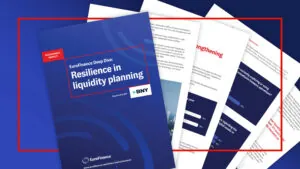
EuroFinance’s Deep-dive series tracked the year’s major shocks as they unfolded—capturing the impact on markets, the policy responses that followed, and the strategies corporates put in place to stay resilient.
Just as global economies were beginning to recover from the effects of the covid-19 pandemic—including disrupted supply chains, inflationary pressures, and rising geopolitical tensions—they were hit by fresh uncertainty. Also read: EuroFinance Deep Dive: Tariffs
Against this backdrop, liquidity resilience moved from an operational concern to a defining priority for treasury teams. Volatile markets, higher rates, cyber risks and accelerating technology have made strong liquidity planning essential for navigating unexpected shocks. Also read: EuroFinance Deep Dive: Resilience in liquidity planning