
Why treasury discipline matters more in LATAM

Corporate treasurers in Latin America face structural complexity, from FX volatility to capital controls. Bruno Damasceno explains how treasury strategy must adapt.
From a distance, Latin America can look manageable. Volatility is priced in. Spreads are wider. Risk premiums are higher. Models adjust.
But, as Bruno Nespoli Damasceno, Head of treasury and risk committee at IBEF SP, a Brazilian association of CFOs and senior finance executives focused on networking, professor at Link School of Business, argues, “the most common miscalculation is assuming that Latin American risk behaves like scaled up G10 risk. It does not.” What global headquarters often underestimate, he says, “is not volatility itself, it is complexity.”
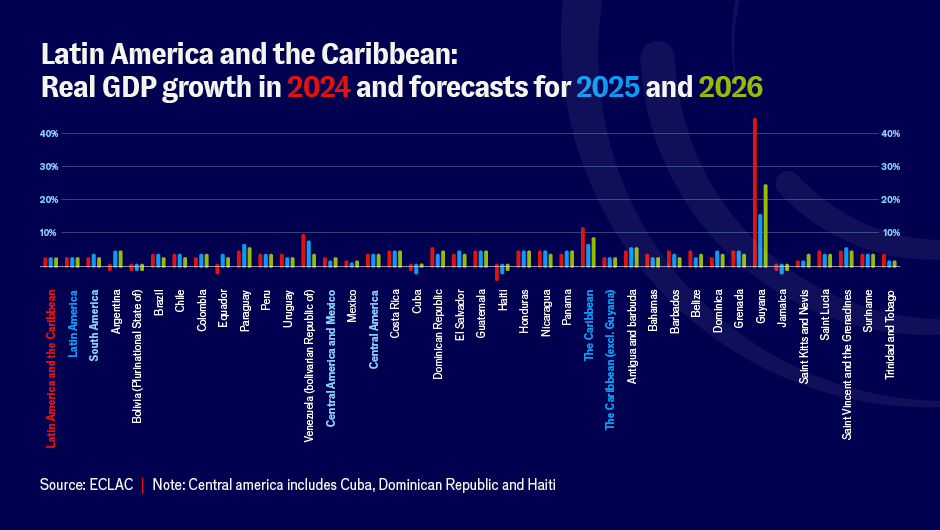
According to the Economic Commission for Latin America and the Caribbean (ECLAC), preliminary overview of economies of Latin America and the Caribbean in 2025, the region continues along a path of low growth, forecasting that the main sources that have sustained economic activity in recent years – namely, private consumption and external demand – will lose vitality in 2026.
ECLAC projects regional GDP growth of 2.4% in 2025 and 2.3% in 2026. “If these forecasts are borne out, the region will accumulate four consecutive years of low growth with average annual growth of just 2.3%.,” the 16th Dec 2025 press release added.
“Latin America does not simply carry higher risk. It carries multidimensional risk,” Damasceno said.
One region, many realities
The region’s diversity is not rhetorical. “Latin America is often described as one region, many realities. For corporate treasurers, this is not a slogan. It is an operating condition,” Damasceno added.
The same Economic Commission for Latin America and the Caribbean added, with regard to external risks, the region’s growth will be dependent upon global GDP growth, especially among its main trading partners, and in global trade.
“Another influential factor will be the United States’ monetary policy stance, which has been more expansionary, and possible changes to that country’s economic and trade policy. In addition, regional growth in 2026 may be affected by uncertainty in international financial markets and possible volatility in external financing flows, including Foreign Direct Investment and remittances,” the report said.
Managing FX and liquidity across Brazil, Mexico and Argentina requires “three distinct mental models.”
Regulatory architecture, inflation dynamics, convertibility regimes and financial market depth differ significantly. A regional strategy that ignores these asymmetries “will either overhedge, underprotect or create structural liquidity risk.”
Segmentation is the priority. “Not all exposures are equal and not all currencies behave under the same rules,” Damasceno added. Treasurers should separate contracted cash flows, forecast flows and structural exposures
Structural exposures, such as long-term capital invested in subsidiaries, demand alignment between funding currency and cash generation currency rather than relying only on derivatives, according to Damasceno.
Capital structure as hedge
In Brazil, Damasceno points to an agribusiness multinational that reduced volatility by funding local operations in BRL rather than USD. Instead of hedging all projected flows, treasury matched local debt to local revenues and selectively hedged highly likely exposures.
The broader principle, he states plainly: “Funding structure is not only a financing decision. It is a determinant of cash preservation.”
Misalignment can distort performance. When Brazilian subsidiaries carry significant USD intercompany debt while generating BRL revenues, currency movements affect profit and loss through FX remeasurement. A strengthening BRL may generate accounting gains that increase taxable income, even though no additional operational cash has been created. From an investor perspective, this represents avoidable cash leakage.
Aligning funding currency with revenue currency lowers volatility, limits unintended tax effects and protects after-tax cash flow.
When traditional hedging breaks down
“Traditional hedging programmes were designed for markets with deep liquidity, transparent pricing and capital mobility,” Damasceno explains. In parts of Latin America, those assumptions do not hold.
“In countries such as Argentina and Bolivia, currency controls and restricted derivative markets fundamentally change how treasury risk must be managed,” he says. In Argentina, capital controls and multiple exchange rates can constrain access to forwards and USD liquidity. Even when derivatives are available, they may not reflect true economic cost
“The financial hedge exists on paper, but the operational risk remains.”
In response, companies shift toward operational hedging: accelerating import payments, indexing pricing to USD, and structurally matching costs and revenues. Exposure classification becomes more detailed, distinguishing accounting exposure from convertibility risk. “Hedging in controlled environments is less about precision and more about resilience.”
Centralise — but how far?
Centralisation offers compelling advantages: consolidated visibility, lower borrowing costs and stronger governance. Yet in Latin America, “the decision is rarely binary. The true challenge is not whether to centralise, but how far.”
The trade-offs are structural. Efficiency versus agility. Visibility versus transferability. A subsidiary in Argentina may report strong local balances, yet capital controls can restrict dividend payments or intercompany loan repayments. “Liquidity exists in accounting terms but cannot be freely transferred.”
Brazil presents subtler frictions: tax complexity, banking concentration and settlement timing can affect real liquidity mobility. The most resilient models adopt layered centralisation. Strategic oversight and policy setting remain central.
Operational liquidity retains local flexibility. Excess cash moves through predefined mechanisms rather than ad hoc approvals.
“Centralisation creates efficiency. Local flexibility creates resilience.”
Complexity, not noise
Regulatory speed is frequently underestimated. “A treasury policy built on last quarter’s framework may already be outdated.”
Capital controls, tax interpretations and FX access rules can shift within weeks.
Behavioural responses add another layer. Payment patterns change during depreciation cycles. Suppliers renegotiate during inflation spikes. In high-inflation environments, nominal growth can mask real erosion.
For Damasceno, the conclusion is clear: “In emerging markets, resilience is not built through tighter control alone. It is built through structural awareness.”
Latin America, he insists, is not simply volatile. It is structurally diverse. The treasurer’s task is not to eliminate that diversity, but to design FX and liquidity frameworks capable of functioning within it. As firms look to 2026, disciplined structure — rather than mechanical uniformity — may prove the region’s most reliable hedge.
Bruno Nespoli Damasceno, Head of the treasury and risk committee at IBEF SP and Professor at Link School of Business, will be speaking at the 30th EuroFinance International Treasury & Cash Management Summit in Miami this May. He will speak in the session “LatAm and FX: Optimising Regional FX and Cash Operations”, alongside André Biasotto, Treasury manager at John Deere; Bernardo Malone, Treasury and collections, senior manager at PedidosYa; and Javier Marti, Director, risk management & treasury at YPF.