
Treasury’s execution challenge comes into focus from EuroFinance Treasury & Cash Management Summit Miami

EuroFinance’s International Treasury & Cash Management Summit Miami poll findings reveal treasury teams are focused on execution over strategy—from cash forecasting and automation to supply chain finance and capital structure.
Artificial intelligence may dominate treasury news. Tokenised deposits are attracting growing attention. And automation is on almost every treasury transformation agenda.
Yet live audience polling at EuroFinance’s International Treasury & Cash Management Summit Miami suggested that many treasury teams remain focused on a more fundamental challenge: execution.
Across discussions on supply chains, automation, investing and capital structure, attendees consistently pointed towards issues that have occupied treasury functions—forecasting cash flows, securing stakeholder buy-in, obtaining internal resources and navigating corporate risk appetite. A common theme at the event, was that technology and financing solutions are becoming increasingly available, but implementation remains far from straightforward.
Supply chain resilience remains a work in progress
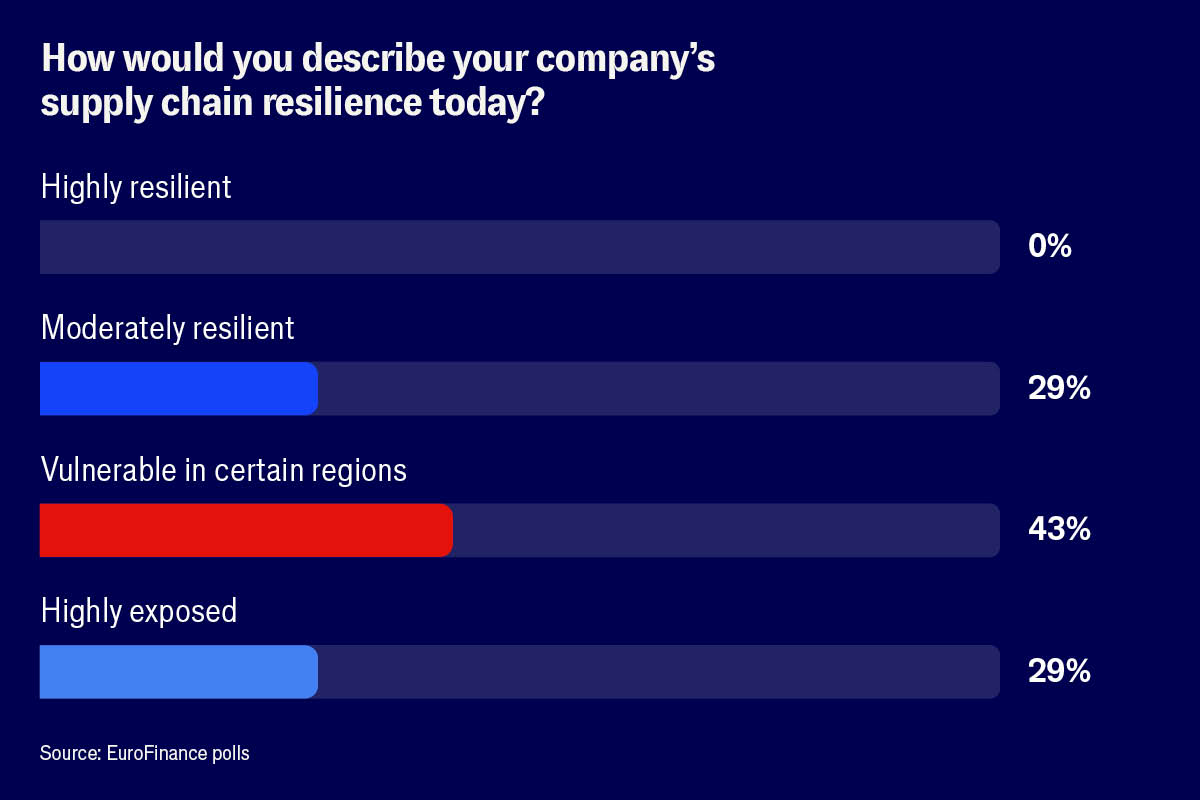
Supply chain resilience remains firmly on the treasury agenda. Audience polling indicated that few attendees believe their organisations have fully solved the problem. No respondents described their supply chains as “highly resilient”, while 43% said they remained vulnerable in certain regions and a further 29% considered themselves highly exposed.
As companies continue to reassess sourcing strategies, inventory policies and geographic risks, a treasurer’s role in supporting liquidity and financial flexibility remains central.
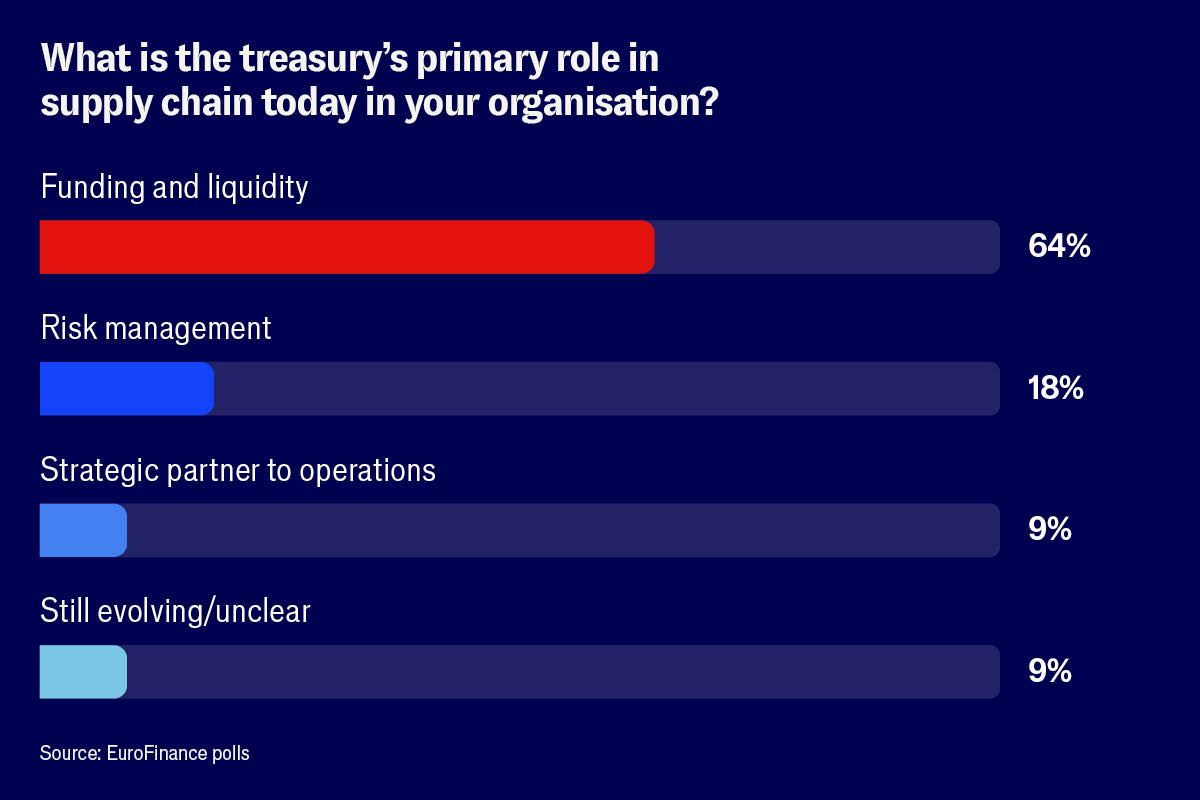
That was reflected in a separate poll, where 64% of respondents identified funding and liquidity as a primary contribution to supply chain management. By comparison, only 18% selected risk management and 9% viewed treasury primarily as a strategic partner to operations.
The challenge, however, is not simply providing funding. When attendees were asked about the biggest obstacle to scaling supply chain finance programmes, more than half (55%) pointed to supplier adoption. A further 36% highlighted internal alignment between procurement, accounts payable and treasury. Notably, no respondents selected bank or liquidity-provider capacity.
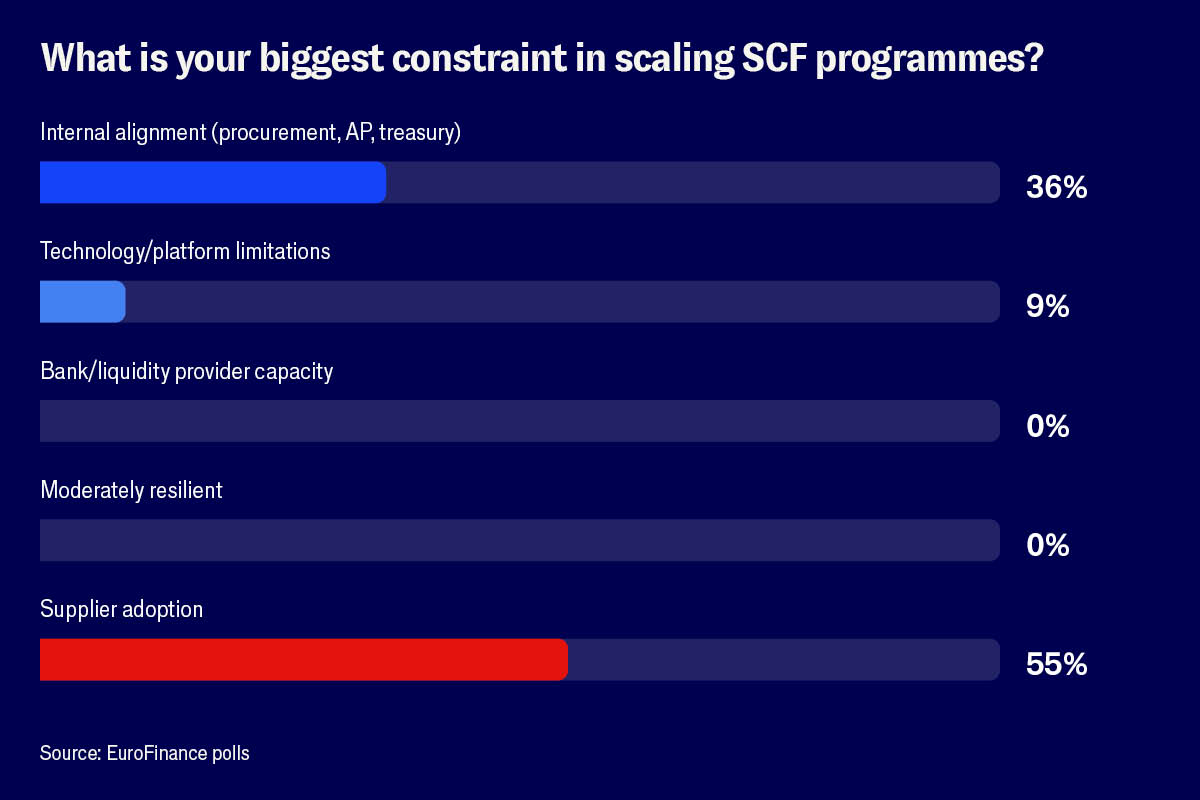
The findings suggest that many SCF programmes are no longer constrained by financing availability, but by participation and coordination.
From automation to AI: the implementation gap
Technology featured prominently throughout the event, but audience responses revealed a practical perspective on transformation.
When asked about the biggest obstacle to automation, the most common response was IT resources (33%), followed by competing priorities within treasury teams (23%). Budget concerns ranked lower, with only 12% selecting cost as the primary barrier.
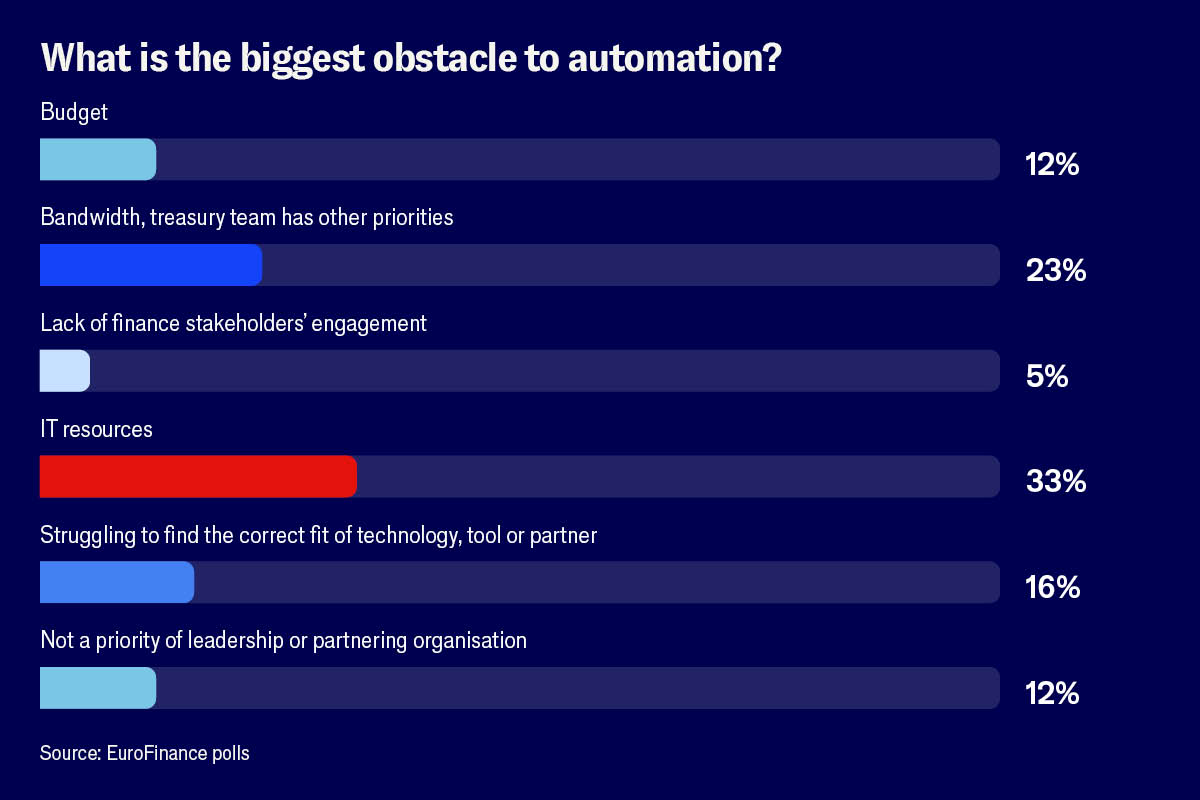
The responses point towards a broader challenge. Technology capabilities continue to expand, yet implementation often depends on securing internal resources and organisational support.
This was also evident in discussions around artificial intelligence. Rather than focusing on experimental use cases, respondents prioritised applications capable of addressing existing treasury pain points. Cash flow forecasting emerged as the leading opportunity for AI adoption, followed by agentic AI solutions for repetitive tasks and bank account management.
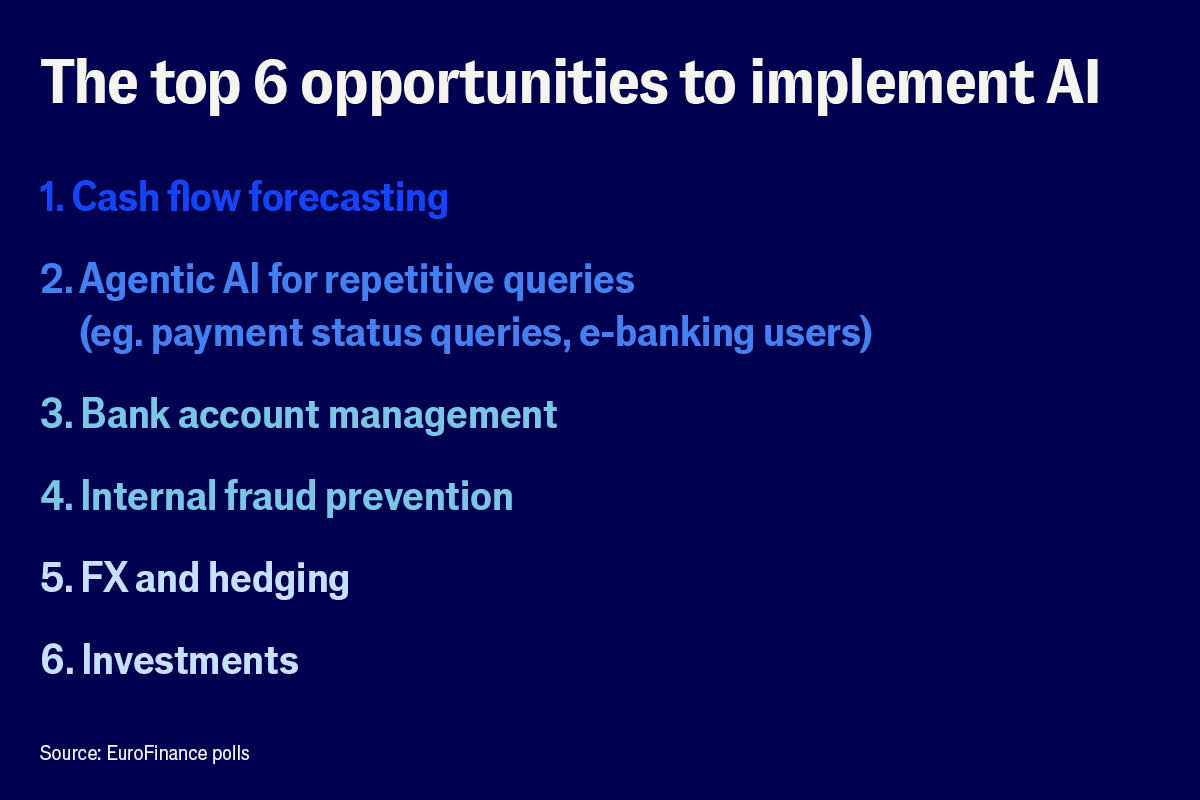
The emphasis on forecasting is particularly noteworthy because it extends well beyond technology discussions.
Visibility remains treasury’s most valuable commodity
Few poll results were as decisive as those relating to cash investing.
Asked about their biggest challenge today, 67% of respondents selected forecasting liquidity needs. By comparison, only 13% cited policy restrictions, while operational complexity and lower yields each attracted just 8% of responses.
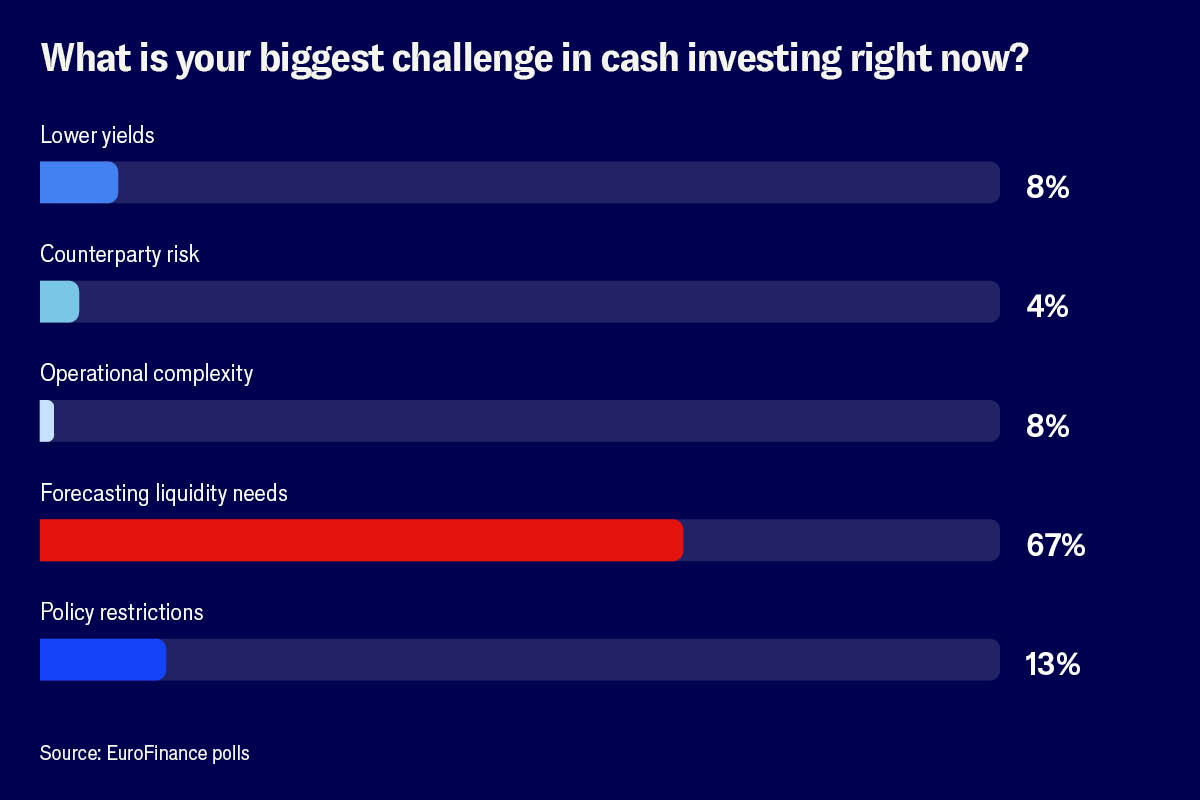
The result highlights a recurring theme across multiple sessions: treasury’s ability to optimise investment decisions increasingly depends on confidence in future cash positions.
Viewed alongside the AI poll, a clear pattern emerges. The strongest demand is not necessarily for new technology, but for tools that improve visibility and decision-making.
Innovation, but at treasury’s pace
Digital cash and tokenisation generated significant discussion throughout the event, yet attendees appeared measured in their expectations.
The largest group of respondents (43%) believe tokenised deposits and digital cash tools will become mainstream within three to five years. Another 25% expect adoption to take longer than five years. Only 11% believe mainstream adoption is already underway, while an equal proportion expect it within two years.
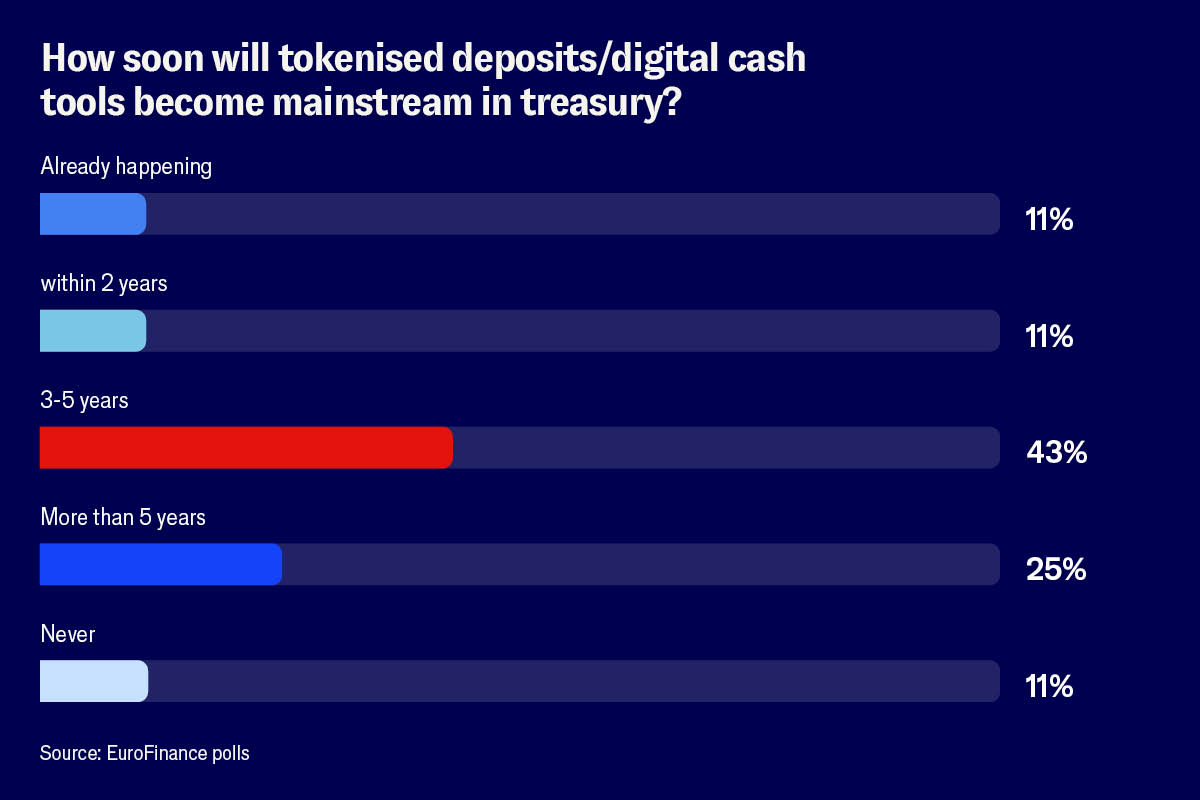
The results suggest that, although interest is growing, most treasury practitioners continue to view adoption as a medium-term development rather than an immediate reality.
New technologies are often assessed not by their novelty, but by their ability to integrate with existing processes, controls and risk frameworks.
Risk is increasingly an internal discussion
Capital structure decisions are often viewed through the lens of interest rates, credit markets and economic conditions. Yet polling in Miami suggested that internal considerations may be just as influential.
Asked about the biggest constraint when optimising capital structure, 61% of respondents pointed to internal risk tolerance from the CFO or board. Market volatility and timing risk ranked second at 28%, while factors such as borrowing costs and market access attracted relatively little support.
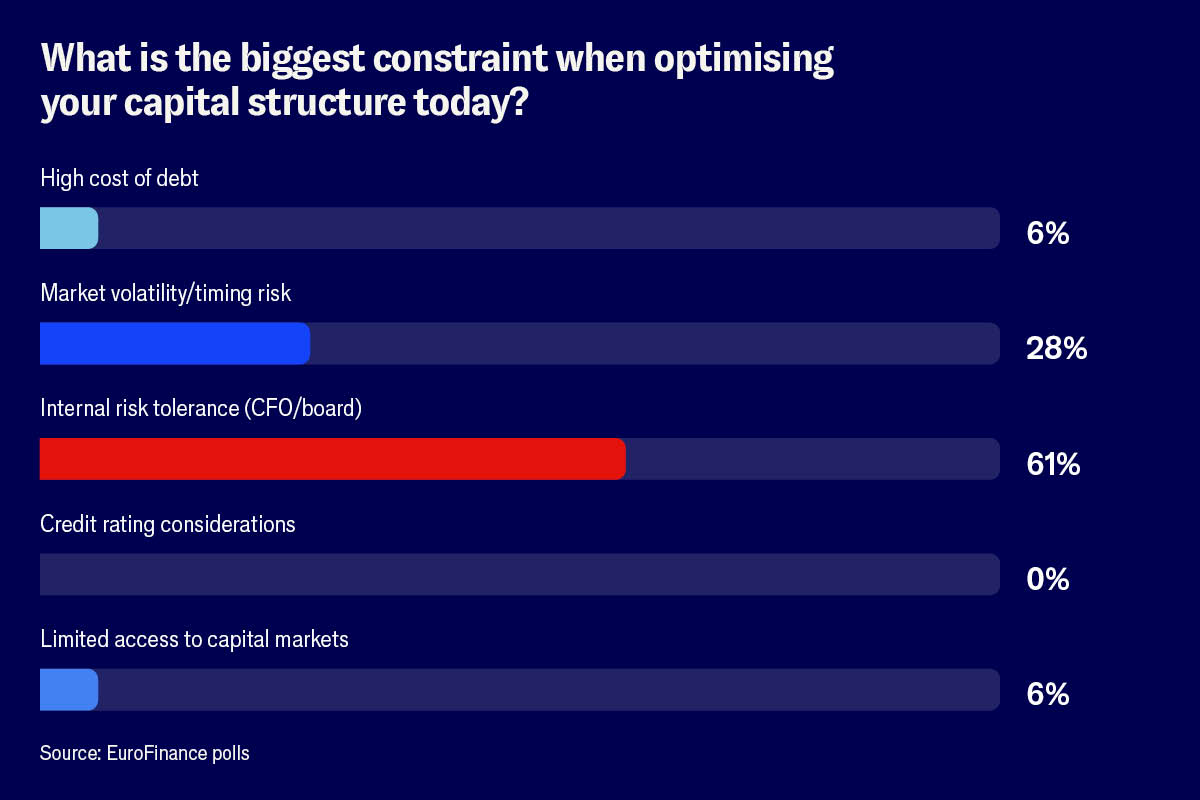
The finding highlights the growing importance of governance in treasury decision-making. Even when financing options are available, organisations must still determine how much risk they are willing to accept.
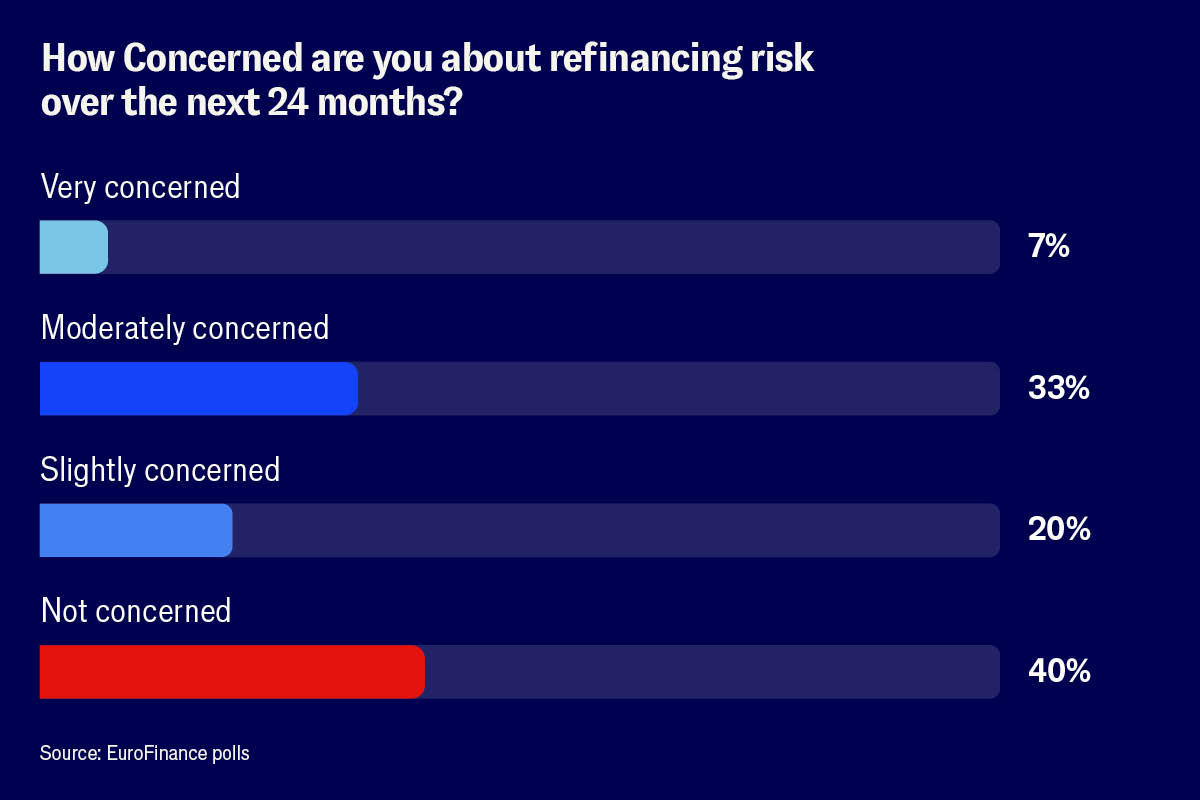
Interestingly, that caution does not appear to be translating into widespread refinancing anxiety. 40% of respondents said they were not concerned about refinancing risk over the next 24 months, while only 7% described themselves as very concerned.
Execution over strategy
Taken together, the polling results show a profession whose priorities are largely established. Treasurers are already focused on resilience, automation, forecasting, AI and funding optimisation.
The challenge now is less about identifying the next strategic priority and more about delivering on existing ones.
Whether scaling supply chain finance programmes, implementing automation initiatives, improving liquidity forecasts or preparing for digital cash, success increasingly depends on organisational alignment, data quality and execution capability. The conversations in Miami suggested that these may be the factors that ultimately determine which treasury teams gain the greatest advantage in future years.