

International Treasury Management 2026 Agenda | Barcelona, Sept 16th-18th
Explore the most comprehensive programme in corporate finance, featuring 8 parallel stages of practitioner-led case studies, geopolitical insights and roundtables. From agentic AI and automation to risk, cash management and liquidity, the 2026 agenda delivers 50+ real-world case studies designed to help you navigate the next era of treasury. View the full three-day schedule below.
Plenary sessions dive into the big picture challenges and opportunities shaping the global landscape for multinational companies in the years ahead.
Cash management is the first stream, as the core discipline that defines the strategic treasury function. A key theme is the transition to advanced, technology-driven treasury functions to improve global cash visibility and provide greater strategic insight. We also tackle complex cash repatriation challenges, exploring strategies for managing trapped cash in restrictive jurisdictions, including the potential role of stablecoins and digital assets in repatriation strategies for treasury.
Our second stream focuses on the strategic role of the treasurer in capital management and structuring. From the navigation of current debt markets, including the complexities of bond issuance and yields in a shifting rate environment, to the need for treasurers to actively manage debt refinancing, the stream tackles the challenge of capital markets now.
The ability to navigate and mitigate risks to cash and liquidity define the strategic treasurer. The strategic integration of automated technologies and artificial Intelligence to manage financial and operational exposures is a core theme.
Strategic treasury is the sum of its partnerships with business units and heads of core functions including tax, legal, finance, accounts, HR and investor relations. In this stream, we explore the critical internal and external relationships shaping the strategic treasury function today.
A rapidly expanding B2B payments universe is explored in this stream, focussing on the strategic applications of real-time payment technologies and analysing their implementation challenges and benefits for treasury in cash management, forecasting and liquidity.
Now the core focus for strategic treasury transformation is centred on artificial intelligence, and the shift to agentic AI and intelligent agents (IA) that can autonomously execute complex tasks, within treasury operations. Together with the integration of AI with robotic process automation (RPA) for improved efficiency, manual reduction, and dynamic process management, the technological goals for treasury are rapidly evolving. The stream also focuses on interconnectivity and next level implementation of APIs, TMS/ERP transformation, blockchain and the use cases for stablecoins and tokens as digital assets. The strategic importance of data, analytics, alignment, and accessibility, to elevate the treasury’s strategic role is covered.
The Inspiration stage shines a light on unique case studies that highlight the digital and transformation of corporate treasury.
Roundtables provide the opportunity for corporate treasurers to share insights, experiences and solutions on common treasury challenges, in a focussed and informal discussion session. Each roundtable session is moderated, and delegates participating can register in advance to secure a place at the table. Seats at roundtables are limited to 12 to enable in depth discussion. Some sessions may have multiple tables, depending on numbers attending.
Registration and morning coffee
Registration sponsor

Conference welcome and opening remarks
Geopolitical risk scenarios for the year ahead
Keynote interview
Justin Trudeau shares his world view on geopolitics and economics at a time of conflict
The year ahead is one of global uncertainties with many potential risk scenarios. In the US, the November 2026 mid-term elections will see President Trump lose or consolidate his power base, with all the implications that entail for foreign and trade policies and the global economy. The war in Iran will weigh heavily on geopolitical and economic outcomes. 2027 is the year that intelligence sources claim China aims to achieve the capability to seize Taiwan. What peace plan might hold between Israel and Palestine? Will the fragile negotiations brokered in Russia and Ukraine bring a close to the conflict and ‘grey war’ with Europe and NATO allies? How might US interventions in Venezuela impact US business in the Americas? And will Europe and Russia challenge the US in their Arctic ambitions? Through all of these uncertainties, trade will continue, and tariffs will persist, as multinational corporations will work to secure supply, across energy, commodities, and rare earth minerals, as the world bifurcates politically, technologically, and economically, between the West and the Global South. In our keynote session, we look at the risks ahead and ask about the probability and preparedness to make progress through uncertainty.
-
Rt. Hon. Justin Trudeau
Former Prime Minister of Canada
X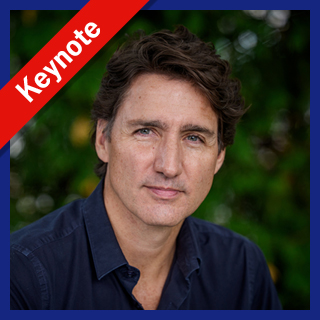
Rt. Hon. Justin Trudeau
Former Prime Minister of Canada
Justin Trudeau’s tenure as Canada’s 23rd Prime Minister coincided with a period of unprecedented global challenge and change.
After leading the third-place Liberal Party of Canada to a historic majority government in 2015, Trudeau set about delivering an ambitious agenda that included appointing Canada’s first gender-balanced cabinet, lifting more than 435,000 children out of poverty through the Canada Child Benefit, launching a national $10-a-day childcare program, advancing Indigenous Reconciliation, and taking robust action to fight climate change, including through policies that attracted investment in clean economic growth and jobs.
Confronted with a series of global economic and security shocks, including Russia’s full-scale invasion of Ukraine and the COVID-19 pandemic, Trudeau worked to address international and domestic issues through bold, decisive action while continuing to deliver on a progressive vision for Canada. The former Prime Minister has amassed powerful insights into societal resilience, high-stakes international diplomacy, the promotion of shared economic growth, and driving meaningful, lasting change.
Before entering politics, Trudeau studied literature at McGill University, completed the University of British Columbia’s education program, and spent several years teaching in Vancouver. He also served as the Chair of Katimavik, on the board for the Canadian Avalanche Foundation, and as an advocate for youth and the environment, taking part in events and conferences around the country.
Trudeau has received numerous international awards including the Atlantic Council’s Global Citizen Award, National Geographic’s Planetary Leadership Award, and Rotary International’s Polio Eradication Champion Award. The proud father of three, Trudeau delivers presentations that combine pragmatic governance insight with an inspiring vision for stronger communities.
September 16th 2026-
09.15am -10.00amGeopolitical risk scenarios for the year ahead
-

European competitiveness: testing the compass
Keynote talk
Margrethe Vestager tackles the tough questions on how Europe can compete with China and the US.
Mario Draghi’s report on The Future of European Competitiveness, and lack of it, has formed the central debate in Brussels and continues to dominate the activities of policy makers in the European Commission. The economic data is clear that Europe lags behind the US and China in key areas of productivity, innovation, capital investment, energy supply and security, and AI technologies. The response of the EC has been to launch initiatives including the European competitiveness compass, a clean industrial deal and a drive for capital markets union to stimulate investment, skills, productivity and growth. The ECB has lowered interest rates to 2 percent, to stimulate growth in the Euro area, which is running a fiscal deficit of 3.1 percent, with debt to GDP ratio 80 percent. Leading economic experts analyse the impact of policies to stimulate growth in the EU, where the global share of GDP has fallen by over 10 percent since 2008, and consider the economic measures required to avoid further decline in global markets.
-
Margrethe Vestager
Former executive vice president, European Commision, former commissioner for competition
European CommissionX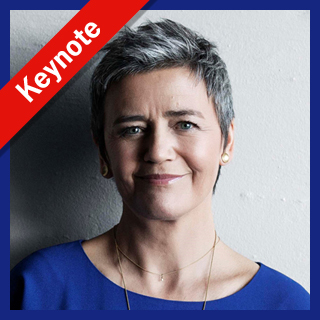
Margrethe Vestager
Former executive vice president, European Commision, former commissioner for competition
European CommissionMargrethe Vestager, a Danish politician, served as the Executive Vice-President of the European Commission for “A Europe Fit for the Digital Age” (2019–2024). She was also the European Commissioner for Competition from 2014 to 2024. Vestager held national ministerial roles in Denmark, including Minister for Economic Affairs and the Interior and Deputy Prime Minister (2011–2014) and Minister for Education (1998–2001). She was a key figure in the Social Liberal Party, serving as its political leader and chair of its parliamentary group between 2007 and 2014. Vestager was also a Member of the Danish Parliament from 2001 to 2014. From 2025, she serves as chair of the Technical University of Denmark. Vestager holds an M.Sc. in Economics (University of Copenhagen).
September 16th 2026-
10.00am -10.45amEuropean competitiveness: testing the compass
-
Break
The networking breaks, held in the exhibition area, are your opportunity to network with peers, industry leaders, and solution providers and discuss new ideas sparked by the sessions. Maximise your time by booking one-on-one meetings in advance through the app.
Conference breaks into streams
Delegates can choose between 6 streams and the Treasury Inspiration stage. Please see the tabs at the top of this page.
AI applications for treasury
Roundtable
Sharing wow moments on how AI is transforming treasury processes and performance. AI promises so much in business and in treasury but what is the use case reality to date? Delegates share their AI strategies, practical use cases, projects, concerns and aims for emergent AI technologies and the risks and opportunities in the future.
Tokenised MMF and intercompany pooling
Case study
Session description tbc.
-
Torgeir Hoff
Group treasurer
Airswift
X

Torgeir Hoff
Group treasurer
Airswift
September 16th 2026-
11.30am -12.15pmTokenised MMF and intercompany pooling
-
AI: how agentic AI will supercharge treasury
Case study
Focus on new agentic AI tools that autonomously execute complex treasury tasks and coding.
While the previous era of AI focused on predictive analytics, the arrival of agentic AI promises a more transformative role for treasury. This session explores the evolution from generative tools to intelligent agents (IA) that can assist or even execute complex treasury tasks autonomously. Treasurers will discuss current practical applications, such as using AI to write code for APIs or managing large datasets within proprietary, secure systems. The panel will also address the critical concerns regarding data privacy and the necessity of building internal AI models to avoid leaking sensitive company information to public platforms. We cite examples of early agentic AI applications, deep dive into how the next generation of AI tools will accelerate treasury transformation.
-
Felix Grevy
VP product, open API and connectivity
KyribaX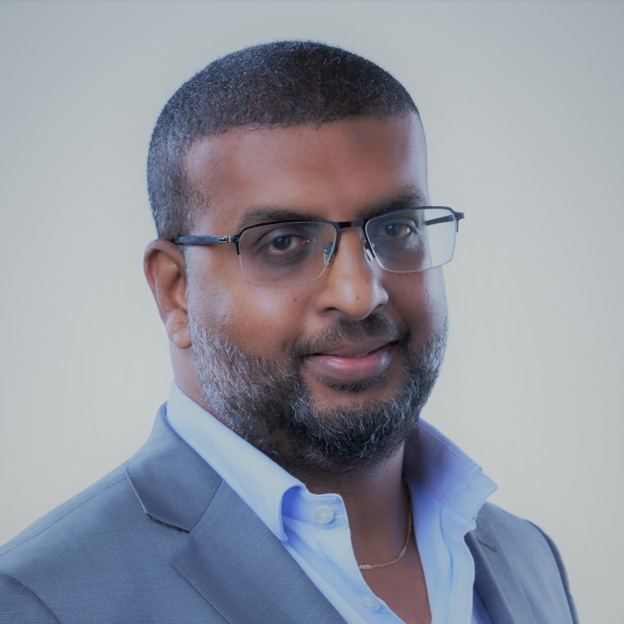

Felix Grevy
VP product, open API and connectivity
KyribaSeasoned executive with a solid background in financial software, combining deep expertise in technology, finance, and leadership. With a career spanning global markets, I bring a strong international perspective shaped by years of collaboration with diverse teams and clients worldwide, including an enriching expatriation experience in Asia. My core competencies lie in SaaS platforms, APIs, artificial intelligence, digital assets and blockchain, as well as treasury, market risk, and complex financial instruments such as derivatives and structured products. I’ve been actively involved across the entire product and platform lifecycle—from ideation and strategy to development and delivery—leading cross-functional teams that span sales, marketing, finance, and engineering. Driven by innovation and collaboration, I thrive in dynamic environments where strategic thinking meets execution.
My experience bridges technical depth and business acumen, enabling me to translate complex concepts into impactful solutions that deliver real value. Outside of executive responsibilities, I remain a hands-on enthusiast—an energetic “vibe coder” who enjoys staying connected to the technology that powers the industry. I’m passionate about building solutions that move the financial ecosystem forward and mentoring teams to reach their highest potential in a fast-evolving digital landscape.
September 16th 2026-
11.30am -12.15pmAI: how agentic AI will supercharge treasury
-
-
Nathalia Pires de Sousa
Global treasury operations director
Aleph Group, IncX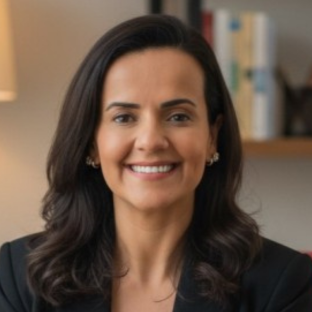

Nathalia Pires de Sousa
Global treasury operations director
Aleph Group, IncNathalia Pires de Sousa is currently the Global Treasury Operations Director at Aleph Group, Inc., based in Madrid, Spain. Aleph is a global leader in digital advertising and technology solutions, connecting brands and platforms across more than 130 markets on five continents.
Before joining Aleph, Nathalia spent over four years at Patria Investments in the Cayman Islands. Prior to Patria, she held treasury leadership roles at WEX, banQi, and Cred-System in Brazil. Throughout her career, she has demonstrated proficiency in effectively managing liquidity and leading M&A integrations, and is currently championing the adoption of AI-powered solutions to enhance treasury operations.
Nathalia holds an Executive MBA in Finance from FGV – Fundação Getulio Vargas and a postgraduate degree in Financial Products and Risk Management from FIA – Fundação Instituto de Administração. She is also a Certified Treasury Professional (CTP), certified by the Association for Financial Professionals (AFP).
September 16th 2026-
11.30am -12.15pmAI: how agentic AI will supercharge treasury
-
Real-time payments in action
Case study
Unearth gems on implementing automated B2B real-time payments to enhance liquidity planning.
Real-time payment technologies involve synchronous automated AP/AR functionalities across cash collections, receivables and procurement. While transfers are available through SEPA Inst in the EU and FedNow in the US, and are widely adopted in B2C businesses, many treasurers are still in the process of fully embracing real-time automated payments in the B2B sphere. This session provides an updated view on real time payment technologies, analysing the operational and technical challenges of implementation and the benefits to treasury in forecasting and liquidity planning. Treasurers will discuss how automating payment functions enables the treasurer to focus on strategic support for the business.
-
Sharyn Tan
Head of cash management and product enablement, treasury
PayPal
X

Sharyn Tan
Head of cash management and product enablement, treasury
PayPal
Sharyn Tan is Head of Liquidity and New Products, Treasury at PayPal, a global payments company with a mission to revolutionize commerce. She leads a multi-continent team responsible for global liquidity operations, optimizing the flow of funds across markets, currencies, and payment rails. In her role, Sharyn partners closely with product, finance, and engineering to design and deliver a unified money movement platform that powers PayPal’s fiat and crypto solutions. Her work increasingly focuses on enabling real-time payments and always-on liquidity, helping to modernize how money moves for consumers, merchants, and institutions worldwide. Sharyn was part of the core team that brought PayPal USD, the first U.S.-regulated stablecoin, to market, and continues to champion its expansion across commerce, payments, and treasury use cases. She is a strong advocate for the convergence of real-time payment systems, digital currencies, and next-generation treasury infrastructure.
September 16th 2026-
11.30am -12.15pmReal-time payments in action
-
HR: Hiring for treasury in the AI era
Panel discussion
Great ideas for hiring digital-native talent and upskilling teams for the AI era.
In the new age of AI, the skill sets required for modern treasurers are evolving. The talent challenge now is how to hire for data fluency and technological aptitude alongside traditional financial acumen and expertise. HR experts and treasury leaders will discuss the rise of the treasury technologist role and strategies for upskilling existing teams, and the use of AI in the hiring process to help eliminate unconscious bias. Treasurers will share how they identify skills and attract digital-native talent, to build diverse teams, and create career paths that retain top performers in a competitive talent market.
FX automation: the all currencies, all markets challenge
Case studies
Clear water on automating dynamic FX trading to manage volatility in emerging market currencies.
Managing foreign exchange risk is increasing in complexity due to factors such a rising dollar and fluctuating values in emerging market currencies. This session debates strategic approaches of natural FX hedging, matching payables and receivables in local currencies, versus financial hedging using FX derivatives, and the technologies involved. As centralising operations becomes the standard, the focus is now on automating dynamic FX trading to reduce the cost of forward and option contracts. Treasurers will discuss the challenges of managing volatility in emerging markets and the automated solutions that enable all currency visibility. The session will cover how automation supports consistent execution in unpredictable market conditions, how AI is advancing FX systems, and managing automation risks.
Bonds: issuance and yields in global corporate bond markets
Case studies
Real world examples on structuring bond issuance while managing shifting maturity cycles.
Corporate treasurers and CFOs are currently navigating a complex period for capital raising as they manage debt portfolios through shifting maturity cycles. This panel explores the role of the treasurer, working with finance teams in the process of structuring and pricing bond issuance for global investors while overseeing relationships with investment banks and rating agencies. With billions of dollars in corporate debt due for refinancing, treasury and finance teams are actively monitoring bond covenants and maturities as rates shift. The discussion will consider different approaches to issuance in major markets, and nuances in both US and Europe. Treasurers will share experiences on delivering debt securities into global investor markets and the current challenges for investment and non investment grade credits as interest rates move.
-
Baris Gokalp
Global treasury director
Sisecam
X

Baris Gokalp
Global treasury director
Sisecam
Barış Gökalp serves as the Global Treasury Director at Şişecam, leading digital treasury management strategies for the world-leading company in the glass and chemicals sector. In this role since 2015, Gökalp manages a 20-person team and brings over 25 years of experience in corporate finance, risk management, and treasury operations across Europe, Asia, and the Middle East. As a pioneer of International Digital Treasury Management in Turkey, he began his career as an Operations Specialist and Financial Analyst at Finansbank, followed by treasury management positions at companies like Vestel, PETKIM, Soktas Tekstil, and FELDA IFFCO. He is the Founding President of the Corporate Treasurers Association and speaks at industry events. In the Adam Smith Awards, he was Highly Commended in the Cyber Security Solution category in 2021, a finalist in Treasury Transformation at the 2022 Alexander Hamilton Awards, and selected as the overall winner of Corporate Treasurer of the Year in 2025. Gökalp emphasizes networking, knowledge sharing, and financial innovations, serving as a passionate advocate for sector transformation.
September 16th 2026-
11.30am -12.15pmBonds: issuance and yields in global corporate bond markets
-
-
Muhammad S. Akbar
Group capital management – general manager
Saudi Telecom CompanyX

Muhammad S. Akbar
Group capital management – general manager
Saudi Telecom CompanySeptember 16th 2026-
11.30am -12.15pmBonds: issuance and yields in global corporate bond markets
-
Forecasting cash for strategic insight
Case study
Discover how to use AI-assisted modeling to reach new levels of cash forecasting accuracy.
Cash forecasting is at the frontline of strategic treasury, the trusted analysis of forward cash flow as markets fluctuates, inflationary pressures persist, and rates waver. Tools to drive the transition from manual, spreadsheet-based predictions to sophisticated, AI-assisted modeling to enable treasurers to predict cash flows deeper into the next business cycle, are taking forecasting to new levels of accuracy. While achieving a perfect forecast remains ever elusive, the focus is shifting to narrowing the margin of error by improving data visibility and utilising predictive analytics to create scenario based modelling. Treasurer’s will discuss the challenge of managing and analysing diverse data sets to feed forecasts, and the technologies required to create predictive scenarios that deliver the intelligence to drive investment and liquidity decisions for the business.
-
Jessika Emard
Treasury senior manager
LinxonX

Jessika Emard
Treasury senior manager
LinxonSeptember 16th 2026-
11.30am -12.15pmForecasting cash for strategic insight
-
Transforming payments operations to deliver optimal liquidity
Case study
Learn best practices for leveraging in-house banking architecture to rationalise global payment terms and optimize corporate working capital.
This case study focuses on accelerating in-house banking efficiencies by utilizing core SAP treasury architecture to detail ‘phase two’ payments implementation and its alignment with corporate strategy. This session centres on utilizing the in-house bank and automated payment workflows to maximize working capital efficiency. Core to the project is an operational transformation to replace daily disbursements with a single, monthly payment run, enhancing cash flow predictability. This change involves consolidating nearly 200 global payment terms into five core standards, aiming for an ‘end of month plus five’ framework, to achieve term rationalisation. The treasurer will also cover cash optimisation via supply chain finance, in the context of the treasury project to rationalise payment terms and create predictable cash flow, forecasts and working capital for the business..
-
Alouis Ngoshi
Group treasurer
Weir GroupX

Alouis Ngoshi
Group treasurer
Weir GroupA Group Treasurer and finance leader with a focus on creating shareholders value and continuous improvement. Believes in a holistic approach to transformation to deliver treasury sustainable structures which aligns with the business strategy. At Weir, they have been involved in a journey of transformation starting with changing the business strategy from a diversified industrial firm, to a pure mine player and now progressing a technology solution for resources extraction. On the treasury side this has involved changes to the capital allocation policy, capital structure and treasury transformation to a shared services model and the building of centres of excellence.
September 16th 2026-
12.15pm -01.00pmTransforming payments operations to deliver optimal liquidity
-
Diversifying cash investments for optimal rates and yields
Roundtable
Expertise on strategically navigating rate and yield movements.
Treasurers and cash managers join this session to share insights and discuss challenges in managing cash equivalent investment solutions for large corporations in the current environment of changing interest rates in Europe and US. The roundtable will cover optimising fixed and floating rates, cash deposits, interest-bearing accounts, money market funds and other short term securities. The scope of the discussion will encompass global securities markets and will aim to equip delegates with insights on how best to optimise cash portfolios as rates and yields change going into 2027 and beyond.
Stablecoins in action: tales from the frontline
Case study
Session description to be confirmed.
-
Carmen Hett
Treasurer
UNHCRX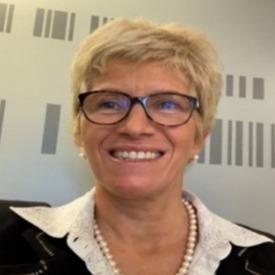

Carmen Hett
Treasurer
UNHCRCarmen Hett, UNHCR’s Corporate Treasurer, is a seasoned corporate finance professional with over 25 years of experience in both the private and public sectors at director and board levels. She specializes in capital structures and global financial market access to support organizational strategies. She is leading the expansion of the Digital Hub of Treasury Solutions (DHoTS), which powers the UN Financial Gateway, enabling seamless financial access globally. Hett is at the forefront of integrating next-generation financial technologies with AI to facilitate digital value transfers and real-time emergency assistance, promoting economic and financial empowerment.
September 16th 2026-
12.15pm -01.00pmStablecoins in action: tales from the frontline
-
Automation and AI case studies in treasury
Case studies
Listen to unique case studies on implementing RPA for time savings and error reduction.
Robotic process automation (RPA) is becoming increasingly prevalent in leading treasuries, with robots efficiently processing payments, FX transactions, and cash operations. This session presents RPA case studies demonstrating how business process automation is working in practice today. Treasurers will reflect on how these processes are evolving with the advent of AI, which can manage automation more dynamically and intelligently in real time. Treasurers will share their experiences implementing these technologies and the measurable benefits they have seen in terms of time savings and error reduction and accurate reporting.
Tax: the treasurer’s twin
Presentation
Actionable insight into navigating global corporate tax reforms like the G20’s BEPS.
Tax shadows cash, and treasurers and tax experts are together focussed on efficiencies. Recent global corporate tax reforms, such as the G20’s BEPS pillar two framework and the 15 percent minimum global tax initiative, have significant ongoing implications for the treasury. These changes impact domestic earnings, cash repatriation strategies, and local currency management. This session examines why tax has become the treasurer’s shadow, requiring constant collaboration to eliminate risk and preserve the value of cash as it moves around the business. Tax analysts and experts will assess the impact of these evolving rules and how the treasury can stay compliant while optimising efficiency in global cash and liquidity operations.
Commodities: hedging risks with derivative strategies
Presentations
Instructive insight into evaluating hedging strategies like forwards and options for price volatility.
Recent geopolitical events have ensured that commodity price volatility remains a significant threat to global supply chains. Treasurers are developing risk mitigation strategies around these exposures, particularly in consideration of war, climate, and event risks. This session discusses how to evaluate potential hedging strategies, such as forwards and options, to manage uncertainty and limit downside risks. Participants will also explore the technologies that assist in decision-making and the execution of complex commodity derivatives, ensuring alignment with the company’s overall risk management framework.
Loans: analysing cost of capital in syndicated loan markets
Case studies
Understand priorities when refinancing revolving credit facilities at higher rates to manage capital.
With a significant volume of global corporate debt reaching maturity, the refinancing of revolving credit facilities (RCF) is a major focus for the treasury. Many five year revolvers taken out at low rates during the pandemic are now refinanced at higher rates, impacting the overall cost of capital. This session models the impact of refinancing these loans across the business, considering how to manage maturities and covenants in line with the company’s risk tolerance. Treasurers will share perspectives from both investment-grade and non-investment-grade ratings and deliver insights on navigating current loan market risks.
-
Frank Waechter
VP treasury and insurance
PUMA
X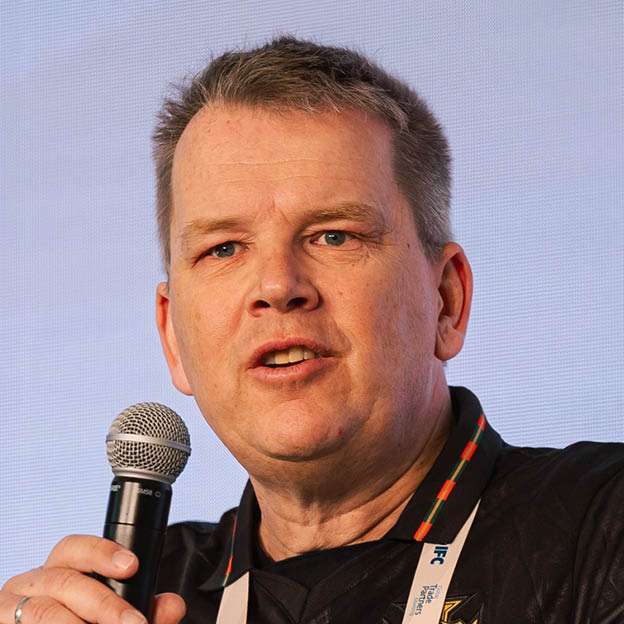

Frank Waechter
VP treasury and insurance
PUMA
Frank Waechter is responsible for any Treasury and Insurance matters within the PUMA group. Being with PUMA for more than 15 years now, he was involved in any Treasury & Insurance related topic for the Sports Manufacturer from the early establishment of the Group function to today’s full-blown setup serving the needs of a multinational corporate. In addition Frank is responsible for any Indirect Procurement topics of the Group and is the acting CFO of PUMA’s International Trading entity responsible for product sourcing. Frank is based at the company’s headquarters in Herzogenaurach near Nuernberg, Germany. Furthermore he is an active member in the German Treasurer’s Association VdT e.V and has been a member of the “Standards for Sustainable Trade and Trade Finance” Working Group of the International Chamber of Commerce.
September 16th 2026-
12.15pm -01.00pmLoans: analysing cost of capital in syndicated loan markets
-
-
Stephen Albers
Global head of treasury
HRS GroupX

Stephen Albers
Global head of treasury
HRS GroupSeptember 16th 2026-
12.15pm -01.00pmLoans: analysing cost of capital in syndicated loan markets
-
-
Joe Fonseca
VP, global treasurer
Crocs Inc.
X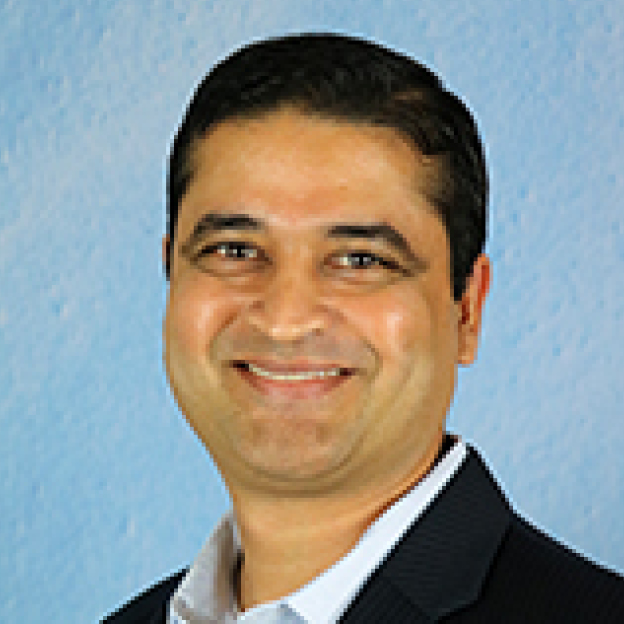

Joe Fonseca
VP, global treasurer
Crocs Inc.
September 16th 2026-
12.15pm -01.00pmLoans: analysing cost of capital in syndicated loan markets
-
Cash pooling: nominal, virtual and actual in practice
Case studies
Glean insights on maximising internal liquidity through actual, nominal, and virtual pooling structures.
In an environment where the cost of borrowing remains elevated, maximising internal liquidity through cash centralisation is a core strategy for companies with regional cash pools. This session explores the evolution of pooling structures, from traditional physical zero-balancing to advanced virtual accounts that offer real-time visibility across global entities. Treasurers will discuss how to free cash from disparately managed pools in multiple jurisdictions, highlighting the resources and technologies required to concentrate foreign currency accounts into a single, strategic viewpoint. Treasurers will explore the practicalities of managing actual versus nominal pooling in various regulatory jurisdictions, and the technological solutions in creating a global cash dashboard.
Lunch

The lunch breaks, held next to the exhibition area, offer a relaxed setting to recharge and reflect on the morning’s sessions. Enjoy a meal while continuing conversations and discovering new ideas in an informal atmosphere.
Lunch
The lunch breaks, held next to the exhibition area, offer a relaxed setting to recharge and reflect on the morning’s sessions. Enjoy a meal while continuing conversations and discovering new ideas in an informal atmosphere.
Lunch
The lunch breaks, held next to the exhibition area, offer a relaxed setting to recharge and reflect on the morning’s sessions. Enjoy a meal while continuing conversations and discovering new ideas in an informal atmosphere.
Lunch
The lunch breaks, held next to the exhibition area, offer a relaxed setting to recharge and reflect on the morning’s sessions. Enjoy a meal while continuing conversations and discovering new ideas in an informal atmosphere.
Lunch
The lunch breaks, held next to the exhibition area, offer a relaxed setting to recharge and reflect on the morning’s sessions. Enjoy a meal while continuing conversations and discovering new ideas in an informal atmosphere.
Lunch
The lunch breaks, held next to the exhibition area, offer a relaxed setting to recharge and reflect on the morning’s sessions. Enjoy a meal while continuing conversations and discovering new ideas in an informal atmosphere.
Lunch
The lunch breaks, held next to the exhibition area, offer a relaxed setting to recharge and reflect on the morning’s sessions. Enjoy a meal while continuing conversations and discovering new ideas in an informal atmosphere.
Lunch
The lunch breaks, held next to the exhibition area, offer a relaxed setting to recharge and reflect on the morning’s sessions. Enjoy a meal while continuing conversations and discovering new ideas in an informal atmosphere.
To be confirmed
Session description to be confirmed
Real-time cash management: delivering strategic value
Panel discussion
Know how treasury is aligning data and systems to create always on visibility in automated cash management reporting.
As the business environment evolves rapidly, the treasurer’s need to deliver strategic insights on cash and liquidity positions is paramount. In moving to proactive real time cash reporting, treasurers can enhance visibility across multiple jurisdictions, accounts, and currencies, enabling immediate intercompany cash pooling and optimised internal liquidity for the business. The treasury infrastructure for real-time cash management—cloud-based TMS systems, connected APIs with bank partners, virtual accounts, global multi-currency cash pooling, and real-time payables and receivables processing—now works together to create an automated, instant view of global cash and liquidity. Aligning internal cash management systems with external banking partners is the critical step to delivering real time capabilities. Treasurers and bank partners here discuss the challenges and solutions in creating real time cash management in global treasury and the strategic benefits to the business.
Working capital workarounds
Roundtable
Swapping ideas on balance sheet management and leveraging assets for liquidity.
With some uncertainty in the rates markets and inflationary pressures lingering, treasurers remain focused on working capital ratios and balance sheet assets to generate liquidity and manage capital costs. In this roundtable we focus on working capital challenges, how treasurers work with financial colleagues and partners to leverage assets for liquidity solutions and strategic capital planning, as markets adjust to the changing economic environment into 2026.
Digital tokens for corporate treasury
Case study
As the adoption of digital assets gathers momentum, treasurers are asking just how much of digital cash equivalents should be held on the balance sheet? The arrival of tokenisation, and stablecoins, has sparked debate about the balance sheet treatment of digital assets. This session discusses the accounting and regulatory rules for digital assets and the risks versus traditional cash and cash equivalents. Treasurers will discuss their risk strategies and their decision-making in managing digital cash pools.
-
Darsh Johal
Chair
Tokenised Cash Management Advisory GroupX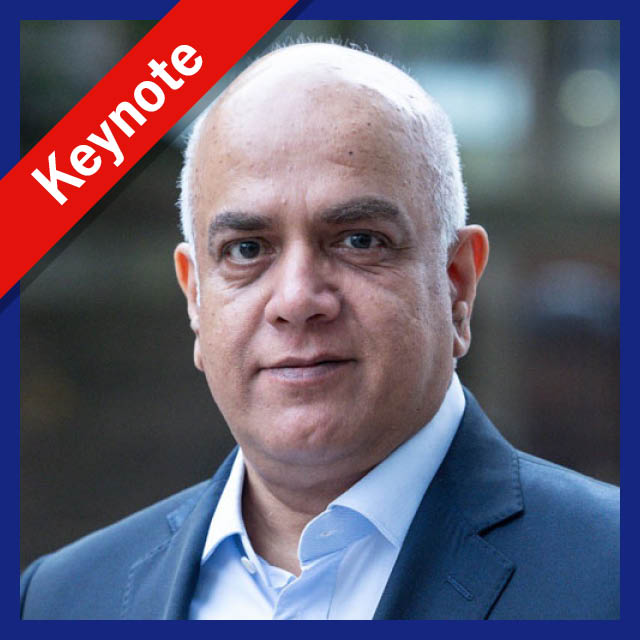
Darsh Johal
Chair
Tokenised Cash Management Advisory GroupSeptember 16th 2026-
02.30pm -03.15pmDigital tokens for corporate treasury
-
TMS/ERP transformation: connecting and defining systems
Panel discussion
Actively lean in on transforming treasury technology stacks with cloud-based TMS and ERP systems.
Many multinational treasuries now rely on cloud-based treasury management systems (TMS) linked to company-wide ERP networks. These virtual technology stacks are vital for secure, anywhere accessibility, but they can be vulnerable to cyber attacks and require robust security strategies. Here treasury technologists discuss the critical considerations in a treasury systems transformation project, including deciding which data stays on secure internal servers versus what goes into the cloud. Treasurers who have recently upgraded their systems will share their data strategies and how they see their tech stacks evolving in the AI era.
-
Jerome Brun
Executive director, global advisory, payments
J.P. MorganX

Jerome Brun
Executive director, global advisory, payments
J.P. MorganJerome joined J.P. Morgan in Paris in 2022. As part of the Global Advisory practice within the firm’s Payments business, he focuses on Corporate Treasury Practices & Technology, where he helps clients navigate an ever-evolving landscape.
A seasoned professional in international treasury management, Jerome is known for his collaborative approach and ability to deliver meaningful value while empowering the teams and companies he works with to achieve their strategic ambitions. Jerome began his professional journey at the Hewlett-Packard Treasury Center before moving into consulting at EY. He is also a lecturer at Lille University, where he teaches and shares his expertise and knowledger in a dedicated programme for future treasurers.
Whether advising clients, mentoring colleagues, or inspiring the next generation of treasury professionals, Jerome brings warmth, dedication, and a genuine desire to make a difference.
September 16th 2026-
02.30pm -03.15pmTMS/ERP transformation: connecting and defining systems
-
-
Susana Aristizabal
Head of international treasury
eBayX

Susana Aristizabal
Head of international treasury
eBaySusana joined eBay in 2020 where she leads the Treasury team responsible for Cash Management and Payments for markets outside of the US. Susana has over 20 years of professional experience in all aspects of Treasury in large multinationals holding leadership positions. She is recognized for process improvements and change management, having implemented several transformation projects in her career. Besides Corporate Treasury, Susana has also worked as Teacher and Consultant.Susana is an International Business graduate from McGill University, an M.B.A from HEC Montreal, and Certified Treasury Professional C.T.P. by the Association of Financial Professionals.
September 16th 2026-
02.30pm -03.15pmTMS/ERP transformation: connecting and defining systems
-
-
Stefano Di Silvio
Director, global process owner and global cash management, treasury
GSK
X

Stefano Di Silvio
Director, global process owner and global cash management, treasury
GSK
I have worked at GSK for almost 10 years, with 7 of those in Treasury. I am currently responsible for delivering Treasury’s strategic change roadmap and ensuring the integrity of its processes within GSK’s ERP template. During my time in the team, my responsibilities have included managing the transactional banking relationships with our core banks; overseeing transactional banking reviews; driving system and process enhancements; coordinating Treasury’s digitization agenda; and supporting international operating units to manage financial risks such as liquidity, funding and FX.
September 16th 2026-
02.30pm -03.15pmTMS/ERP transformation: connecting and defining systems
-
-
Olivia Hall
Treasury manager
Weir GroupX
Olivia Hall
Treasury manager
Weir GroupTreasury Manager with over a decade of experience spanning cash management, liquidity, FX dealing and risk oversight. With hands on treasury transformation and change delivery: improving processes, strengthening controls, and modernising systems alongside business change (including M&A activity), Olivia brings a practical view of treasury’s evolution.
September 16th 2026-
02.30pm -03.15pmTMS/ERP transformation: connecting and defining systems
-
Managing counterparty risk with automated real time dashboards
Case study
Step by step blueprint for derisking liquidity exposure with automation.
ASML has successfully transformed its counterparty risk management by moving from fragmented, manual processes to a fully automated, real-time framework. This transformation centers on the introduction of dynamic counterparty limits. Unlike the previous reliance on lagging credit ratings, these new limits are linked to daily cash positions and immediate market indicators, such as CDS spreads, enabling a forward-looking approach to risk. A centralized dashboard acts as the single source of truth, consolidating all exposures, including bank balances, investments, letters of credit, and money market funds, into one transparent, real-time view. By embedding daily automated data flows and dashboarding into treasury operations, the company eliminated manual reporting, leading to significant improvements in both efficiency and data quality. This practical method is highly transferable for treasuries that handle large, volatile liquidity positions and navigate complex banking environments.
Investor relations and treasury: give & take
Case studies
Take away tips for managing investor confidence and pension obligations through treasury partnerships.
The combination of treasury and investor relations (IR) is a frequent organisational structure that often requires treasurers to wear both hats. Treasurers play a key role in maintaining investor confidence and managing complex pension obligations, often sitting on investment committees. This session explores how treasury and IR teams work together to make both investment decisions and communicate performance, based on market analysis and ongoing risk assessments, to investors. Treasurers will discuss the benefits of IR partnerships in creating value for the business, employees, and shareholders, particularly when navigating volatile investment markets as rates change.
-
Gábor Szűcs
Director of financial operations
Richter Gedeon
X

Gábor Szűcs
Director of financial operations
Richter Gedeon
September 16th 2026-
02.30pm -03.15pmInvestor relations and treasury: give & take
-
-
Karen Van Den Driessche
Head of tax and treasury
Lipton
X

Karen Van Den Driessche
Head of tax and treasury
Lipton
September 16th 2026-
02.30pm -03.15pmInvestor relations and treasury: give & take
-
Payments automation: real time systems for treasury
Case study
Take stock of the technologies enabling real time payments automation in treasury.
Payments automation is revolutionising payables and receivables (AP/AR) by reducing the time needed to manually track invoices and manage collections. For the treasurer, this automation provides greater data visibility for a more complete and accurate cash forecast. In the era of real time payments, the drive toward automation is accelerating. This session presents practical case studies and expert insight on how automating payables and receivables cycles assists in predicting cash flow, liquidity planning, and working capital needs. Treasurers will discuss strategies for partnering with internal AP/AR and technical teams, and external banking partners, to achieve systems interoperability in automating real-time payment technologies.
In-house bank structuring: managing internal loans for capital efficiency
Case studies
Expert insight into the optimal management of internal capital across the business
Treasurers are increasingly developing effective in-house banking structures to manage the complexities of cash centralisation, internal lending and working capital allocation. This panel explores how treasurers provide the business and its subsidiaries with necessary liquidity facilities while ensuring that internal cash pools are structured for liquidity and working capital efficiency. The discussion will touch on the tax treatment of cross-border intercompany loans and their reporting requirements. Treasurers will share their current experiences in creating the processes and structures to facilitate intercompany lending and how the benefits to the company and subsidiary operations.
-
Juergen Drebes
VP, corporate treasury
AdidasX

Juergen Drebes
VP, corporate treasury
AdidasDr. Juergen Drebes is Vice President Corporate Treasury at adidas. He began his career at agricultural machinery manufacturer Claas before moving to healthcare group Fresenius, where he held several Treasury roles. He has been with adidas for over ten years and has led the Corporate Treasury function for more than eight years. adidas is a global sportswear company generating EUR 24.8 billion in revenue (2025) and employing 65,000 people worldwide.
September 16th 2026 -
-
Waqas Syed
Director, head EMEA & APAC, corporate treasury
Thermo FisherX

Waqas Syed
Director, head EMEA & APAC, corporate treasury
Thermo FisherWaqas Syed leads the Corporate Treasury function for the EMEA and APAC regions at Thermo Fisher Scientific. He oversees a team responsible for a broad range of treasury activities, including cash management, In-house banking, the global netting program, foreign exchange (FX), treasury management systems (TMS), system integration, banking structure, and trade finance.
Since joining Thermo Fisher Scientific in 2010, Waqas has played a key role in strengthening and expanding the company’s global treasury capabilities. In addition to his operational responsibilities, he serves as a board member for several Thermo Fisher entities across the UK, Luxembourg, Saudi Arabia, and Pakistan.
Waqas began his career as a management trainee at Bank Alfalah before moving to Shell, where he worked in the UK Treasury division. He holds a CIMA Advanced Diploma in Management Accounting (Adv Dip MA), an MSc in Economics, Banking and Finance from the University of Glasgow, an MBA from the Institute of Business Administration (IBA), Karachi, and a bachelor’s degree in Civil Engineering from NED University of Engineering and Technology, Karachi.
September 16th 2026 -
Tokenisation and stablecoins
Roundtable
Get to grips with the hottest technology transforming payments and settlement.
Stablecoins have arrived and are transacting in and around treasury markets, with some $280bn volumes in 2026 and rising. From cross bored payments to repo contracts, stablecoins are underpinning receivables and securities in on chain treasury transactions. Here we discuss the applications for stablecoins in the treasury context and the technologies that enable their use alongside traditional payments.
AI model: raw data to cash flow forecast
Case study
Session description tbc
-
Hikaru Kozuki
Senior treasury specialist, head of treasury unit
UNHCRX
Hikaru Kozuki
Senior treasury specialist, head of treasury unit
UNHCRSeptember 16th 2026-
03.15pm -04.00pmAI model: raw data to cash flow forecast
-
AI innovation in FX and ALM at Roche
Case study
Frontline insight and innovation on AI applications in treasury front office.
This unique case study details Roche treasury’s digital transformation journey across FX and Asset Liability Management (ALM), highlighting the strategic integration of automation and AI. Miguel Trapero, specializing in FX, will share the experience of automating, integrating, and optimizing end-to-end FX hedging, explaining how this has led to highly efficient, scalable, and risk-optimized FX management, and will explore how an AI agent could speed up decision-making by dynamically adjusting rule variables based on market data. Aramis Buscemi will detail the ALM front office’s strategy of transforming raw treasury data into a scalable, strategic asset by extracting core TMS data and converging it with external market data in a centralized data lake. This segment will demonstrate how this modern data architecture facilitates rich digital dashboards and leverages Large Language Models (LLMs) for AI-assisted programming (known as ‘vibe coding’) to rapidly generate complex reports and uncover insights for better-informed, strategic decision-making.
-
Miguel Trapero
FX and affiliate financing manager
RocheX

Miguel Trapero
FX and affiliate financing manager
RocheSeptember 16th 2026-
03.15pm -04.00pmAI innovation in FX and ALM at Roche
-
12.00pm -12.45pmCash repatriation solutions for complex countries
-
-
Aramis Buscemi
Asset and liability manager
RocheX
Aramis Buscemi
Asset and liability manager
RocheAs a Senior Treasury Front Office Manager with over a decade of experience, I (Aramis) manage the Asset Liability Management for Roche Treasury. My responsibilities include investing corporate liquidity, managing interest rate exposure, and driving the strategy and execution of external capital markets funding. I played a pivotal role in the adoption of modern data analytics within our treasury department, acting as a key champion for the modernization of analytics and reporting by bridging our core legacy systems with centralized data lakes. Our core philosophy was simple but transformative: Treat data as a highly liquid asset — ensure it flows as freely as corporate liquidity and mobilize it to where computational power is highest, ensuring seamless integration and maximum flexibility for advanced reporting and analytics. What was somehow visionary for our Treasury back then is now reality.
September 16th 2026-
03.15pm -04.00pmAI innovation in FX and ALM at Roche
-
Cross border realities: payment challenges and solutions
Case study
For treasurers of multinational companies, managing cross-border payments often involves a complex mix of batch processing, SWIFT messaging, and various local ACH systems. The payment ecosystem is proliferating with myriad new products, but the challenge remains the interoperability of these new technologies with legacy systems. This session focuses on treasurers who have developed interoperable platforms to bridge these gaps, taking a look under the hood at the technology enabling the coexistence of different payment rails. The discussion will also cover the impact of real-time transfers on international liquidity management.
FP&A: parallel forecasts and analysis for strategic insights
Panel discussion
High level insights in creating parallel forecasts to optimise high-level financial decision-making.
The strategic relationship between the treasurer and the head of financial planning and analysis (FP&A) is beneficial for financial forecasting intelligence. FP&A’s expertise in financial modeling and variance analysis helps treasury develop forecasts that inform strategic high-level financial decision-making. Here we examine how treasury and FP&A teams can work together to create parallel forecasts that include the treasurer’s view on cash positions and the business’s overall performance. Treasurers will discuss how identifying potential risks through strategic shared modeling leads to optimised cash and capital allocation across the business.
-
Maaike Vermeulen
Group treasurer
AllseasX

Maaike Vermeulen
Group treasurer
AllseasSeptember 16th 2026-
03.15pm -04.00pmFP&A: parallel forecasts and analysis for strategic insights
-
-
Ariane Van der Eecken
Assistant treasurer
AvnetX

Ariane Van der Eecken
Assistant treasurer
AvnetSeptember 16th 2026-
03.15pm -04.00pmFP&A: parallel forecasts and analysis for strategic insights
-
-
Simon Randall
Director of planning and performance
Save the Children InternationalX

Simon Randall
Director of planning and performance
Save the Children InternationalSimon is Director of Financial Planning and Performance at Save the Children International, the world’s leading children’s charity. He leads the FP&A team managing SCI’s budget, and coordinates the wider Save the Children movement’s $2.5bn budget, aiming to optimise the use of resources for programmes that benefit children around the world. He has been with Save the Children for 15 years, with previous roles on development and humanitarian projects in South Sudan, Iraq, Syria, Egypt and Yemen, the European refugee response in Greece and four years as Regional Finance Director in West and Central Africa. In a former life he spent four years in finance in the UK with Deloitte, where he qualified as a Chartered Accountant. Outside work, Simon spends his time trying to develop the football careers of daughters Camille (7) and Chloé (5).
September 16th 2026-
03.15pm -04.00pmFP&A: parallel forecasts and analysis for strategic insights
-
Compliance KPIs for derisking operations
Presentations
Clear case study on implementing due diligence and data analytics for AML and sanctions compliance.
Treasurers monitor both internal and external compliance requirements to ensure cash is moved in accordance with company policies, and with the applicable laws. Regulatory compliance for anti-money laundering (AML), Know Your Customer (KYC), and sanctions has become a critical treasury function for safeguarding financial assets. Compliance practices must keep pace with evolving regulations, such as FinCEN requirements in the US and international sanctions regimes. Here treasurers discuss how they work with compliance teams to implement due diligence procedures throughout the business and supply chain, and the use of data analytics to enhance transparency and traceability as cash moves through the business.
In-house banking: streamlining POBO, COBO for cash efficiency
Panel discussion
Unearth gems on streamlining POBO and COBO structures to improve internal liquidity control.
The development of in-house banking (IHB) capabilities is gathering pace as companies prioritise internal liquidity in the current interest rate environment. By implementing ‘payments on behalf of’ (POBO) and ‘collections on behalf of (COBO) structures, treasury acts as a central hub for subsidiaries, reducing bank fees and improving control. This session examines how treasurers work with internal strategic partners to ensure the success of IHB projects, including intercompany loans and centralised cash operations. The panel will also discuss the technologies that enable connectivity and data flow in external and internal systems to deliver efficient IHB platforms.
-
Austin Matthews
Assistant treasurer
SkyX

Austin Matthews
Assistant treasurer
SkyAustin Matthews FCT CGMA is the Assistant Treasurer of Sky, having joined in 2016 when the company was a publicly listed entity, prior the acquisition by the US based Comcast Corporation. He is responsible for FX Risk Management, Liquidity Management and Cash Management at Sky, as well as the responsibility for managing the operations of Comcast’s global multi-currency cashpool and in-house-bank , which is concentrated into the UK. He previously held senior Treasury positions at Thames Water, Cable & Wireless and Shire Pharmaceuticals.
September 16th 2026-
03.15pm -04.00pmIn-house banking: streamlining POBO, COBO for cash efficiency
-
-
Floor Meeuwis
Liquidity products advisory
Société GénéraleX

Floor Meeuwis
Liquidity products advisory
Société GénéraleFloor Meeuwis is Liquidity Product Advisor in Cash Management at Société Générale CIB, where he specialises in bank-side liquidity and treasury solutions for corporate clients. From classic notional pooling and physical sweeping structures to the rise of in-house banks and the emerging world of stablecoins and tokenised cash, Floor helps corporates navigate the full spectrum of liquidity evolution — wherever their treasury is on that journey. With a front-row seat to some of the most significant shifts in cash management, he works closely with clients to future-proof their liquidity frameworks, balancing the tried-and-tested with the genuinely new.
Floor is also an active speaker and moderator at industry events, where he’s known for making even the most complex treasury structures feel surprisingly approachable.
September 16th 2026-
03.15pm -04.00pmIn-house banking: streamlining POBO, COBO for cash efficiency
-
Break
The networking breaks, held in the exhibition area, are your opportunity to network with peers, industry leaders, and solution providers and discuss new ideas sparked by the sessions. Maximise your time by booking one-on-one meetings in advance through the app.
EuroFinance Treasury Excellence Awards
Please return to the main stage for the EuroFinance Treasury Excellence Awards
EuroFinance Treasury Excellence Awards
Please return to the main stage for the EuroFinance Treasury Excellence Awards
EuroFinance Treasury Excellence Awards
Please return to the main stage for the EuroFinance Treasury Excellence Awards
EuroFinance Treasury Excellence Awards
Please return to the main stage for the EuroFinance Treasury Excellence Awards
EuroFinance Treasury Excellence Awards
Please return to the main stage for the EuroFinance Treasury Excellence Awards
EuroFinance Treasury Excellence Awards
Please return to the main stage for the EuroFinance Treasury Excellence Awards
EuroFinance Treasury Excellence Awards
Please return to the main stage for the EuroFinance Treasury Excellence Awards
EuroFinance Treasury Excellence Awards
Please return to the main stage for the EuroFinance Treasury Excellence Awards
EuroFinance Treasury Excellence Awards
Awards presentation
The EuroFinance award winners are presented, and a winning panel provides their predictions on key treasury trends for the coming year.
The annual networking reception
Tour the best in class exhibition floor while enjoying cocktails and canapes. Spark conversation, make dinner plans and grow your network with the most prestigious treasury crowd of the year.
Day 1 ends
Plenary sessions dive into the big picture challenges and opportunities shaping the global landscape for multinational companies in the years ahead.
Cash management is the first stream, as the core discipline that defines the strategic treasury function. A key theme is the transition to advanced, technology-driven treasury functions to improve global cash visibility and provide greater strategic insight. We also tackle complex cash repatriation challenges, exploring strategies for managing trapped cash in restrictive jurisdictions, including the potential role of stablecoins and digital assets in repatriation strategies for treasury.
Our second stream focuses on the strategic role of the treasurer in capital management and structuring. From the navigation of current debt markets, including the complexities of bond issuance and yields in a shifting rate environment, to the need for treasurers to actively manage debt refinancing, the stream tackles the challenge of capital markets now.
The ability to navigate and mitigate risks to cash and liquidity define the strategic treasurer. The strategic integration of automated technologies and artificial Intelligence to manage financial and operational exposures is a core theme.
Strategic treasury is the sum of its partnerships with business units and heads of core functions including tax, legal, finance, accounts, HR and investor relations. In this stream, we explore the critical internal and external relationships shaping the strategic treasury function today.
A rapidly expanding B2B payments universe is explored in this stream, focussing on the strategic applications of real-time payment technologies and analysing their implementation challenges and benefits for treasury in cash management, forecasting and liquidity.
Now the core focus for strategic treasury transformation is centred on artificial intelligence, and the shift to agentic AI and intelligent agents (IA) that can autonomously execute complex tasks, within treasury operations. Together with the integration of AI with robotic process automation (RPA) for improved efficiency, manual reduction, and dynamic process management, the technological goals for treasury are rapidly evolving. The stream also focuses on interconnectivity and next level implementation of APIs, TMS/ERP transformation, blockchain and the use cases for stablecoins and tokens as digital assets. The strategic importance of data, analytics, alignment, and accessibility, to elevate the treasury’s strategic role is covered.
The Inspiration stage shines a light on unique case studies that highlight the digital and transformation of corporate treasury.
Roundtables provide the opportunity for corporate treasurers to share insights, experiences and solutions on common treasury challenges, in a focussed and informal discussion session. Each roundtable session is moderated, and delegates participating can register in advance to secure a place at the table. Seats at roundtables are limited to 12 to enable in depth discussion. Some sessions may have multiple tables, depending on numbers attending.
Registration and morning coffee
Registration sponsor
AI: the next chapter
Expert panel discussion
AI maggedon or AI heaven? The future of AI and its impacts are hotly debated.
Next generation AI is moving rapidly into an agentic model, capable of integrating into human workflows, executing tasks, developing skills, researching new solutions, and aligning with organisational structures and systems. As governments create AI investment initiatives such as the ‘Genius Mission’ in the US, and AI policies to promote AI growth in sectors such as energy and healthcare, tech companies are investing trillions of dollars, over $400 bn in 2025, to accelerate AI technologies. Investor fears of overvaluation and irrational markets, where AI revenues are a small fraction of the current AI infrastructure spend, have sounded warnings of a stock market bubble. Yet few would say that AI will not deliver industrial transformation, even as companies struggle to make current AI models productive and deliver financial benefits, the commercial potential in AI applications remains high. So how will next gen AI transform companies and markets? Here we discuss the future of AI, and the next chapter of development beyond generative LLMs, the investments and policies that companies and governments will make to develop AI infrastructure, and how choppy markets will produce AI winners.
Strategic treasury
Treasury leaders panel
Group treasurers of Europe’s leading companies describe how to build a strategic treasury that creates value and competitive advantage.
Treasurers often describe strategic treasury as a desired destination of treasury in transition, moving beyond operational activities to become a strategic partner to the CFO and business heads, by creating value, financial resilience, and supporting corporate growth. In practical terms, strategic treasury is often enabled by operational efficiencies, driven by automated processes, enabling the treasurer to switch focus from day-to-day operations to focus on strategic goals and activities. From reviewing capital structuring to optimising investments, to securing liquidity, managing financial risks and delivering market insights to business leaders, strategic treasurers are driving critical value to successful corporations. In essence, the strategic treasury concept represents the zenith of treasury, where the treasurer becomes integral to the success and competitiveness of the company, adding voice and insights to high level decision making, from acquisitions to market exits. In this session we hear from strategic treasurers who have successfully automated operations and elevated their activities to the greater benefit and growth of the companies they serve.
-
Joan Schutte
VP and corporate treasurer
ASML Netherlands B.V
X

Joan Schutte
VP and corporate treasurer
ASML Netherlands B.V
Joan Schutte has been VP & Corporate Treasurer at ASML since 2014. He is responsible for Treasury, Corporate Finance and Insurances worldwide. From 2010 – 2014 Joan was Director Treasury for VimpelCom (VEON) where he set up the Treasury function for the HQ in Amsterdam. Before that he worked for 12 years with Sara Lee Corporation in various senior Treasury/Corporate Finance roles in Curaçao, Singapore and Chicago and as Finance Director for the global procurement function in Utrecht. Joan started his career in Treasury in Belgium with CSM and Campbell Soup Company after receiving his MSc in Economics at the University of Amsterdam. Joan served many years as Chairman of the Dutch ACT and as board member of the Singapore ACT.
September 17th 2026-
09.45am -10.30amStrategic treasury
-
-
Wolfgang Ratheiser
Vice president, corporate finance and treasury
Porsche AG
X

Wolfgang Ratheiser
Vice president, corporate finance and treasury
Porsche AG
Wolfgang Ratheiser has been Vice President Corporate Finance & Treasury at Porsche AG since the beginning of 2017. Previously, he was responsible for various financial positions for more than fifteen years, including as Corporate Treasurer Asia Pacific / Middle East in Hong Kong and as Finance Director (CFO) for the Automotive Europe Metal Division at Johnson Controls. Before joining Johnson Controls, Ratheiser worked for Henkel in various positions for more than four years, including in Hong Kong, Shanghai, Bangkok and Düsseldorf. Born in Austria, he studied at the Vienna University of Economics and Business at the University of Illinois and completed the General Management Executive Management program at Harvard Business School.
September 17th 2026-
09.45am -10.30amStrategic treasury
-
-
Mandana Sadigh
SVP and treasurer
Mattel Inc.
X

Mandana Sadigh
SVP and treasurer
Mattel Inc.
Mandana Sadigh serves as the Senior Vice President and Corporate Treasurer of Mattel. She is responsible for all aspects of global treasury operations, capital investment policy, global insurance, and risk management. She has over 30 years of experience at Mattel leading corporate finance and strategy functions, serving as the Divisional CFO for the largest segments of the business. Earlier in her career, Mandana held a variety of roles in corporate banking. She is a member of Mattel’s Administrative Committee, responsible for overseeing Mattel’s retirement, 401(k) and deferred compensation plans. Mandana is the President and member of the Board of Directors of Far West Insurance Company, a subsidiary of Mattel, Inc. She sits on the Board of The Toy Association, where she serves on the Investment Committee. Mandana is also a member of Bank of America’s Global Corporate Advisory Board.
September 17th 2026-
09.45am -10.30amStrategic treasury
-
Moderated by
-
Takachida Kuhudzai
Head of treasury
AvonX

Takachida Kuhudzai
Head of treasury
AvonAs Regional Treasurer, Takachida leads treasury strategy for business units in Europe, Middle East & Africa covering foreign exchange risk management, capitalisation, funding, cash management and working capital. Takachida is also responsible for managing bank relationships across the EMEA region.
September 17th 2026-
09.45am -10.30amStrategic treasury
-
Break
The networking breaks, held in the exhibition area, are your opportunity to network with peers, industry leaders, and solution providers and discuss new ideas sparked by the sessions. Maximise your time by booking one-on-one meetings in advance through the app.
Agentic AI applications in transaction banking and treasury services
Panel discussion
Bank partners discuss the development of treasury services in the AI era.
Treasury and transaction banking is entering the era of agentic AI, promising greater efficiency in services and execution. So how are banks working in partnership with treasurers to evolve and develop treasury products and services in the agentic AI era?. Corporate treasurers can enable AI agents to automatically populate cash forecasts with data or allocate working capital for real-time liquidity optimisation across global entities 24/7. Predictive cash forecasting has reached a new level of precision, treasurers now deploy agents that learn from complex payment patterns to achieve greater accuracy. AI agents can automate FX transactions and execute hedging at the optimal cost. Autonomous AI agents can plan and execute financial workflows across ERPs and banking APIs without manual intervention. AI and automation enable treasurers to move beyond operational oversight to strategic planning. So what will the future of treasury banking services look like when AI agents execute core treasury functions? Here leading bankers discuss their AI visions.
Conference breaks into streams
Delegates can choose between 6 streams and the Treasury Inspiration stage. Please see the tabs at the top of this page.
Forecasting and visibility
Roundtable
Deep dive into delivering high quality data for fantastic forecasts.
Forecasting and accuracy has improved in recent years with specialist software, better data processing and AI analytics. Yet many treasurers are still catching up with new tools and techniques. What are the core challenges of migrating from spreadsheets to TMS/cash forecasting software, and is this desirable? What are the workflow solutions for gathering forecasting data from internal and external sources, and is AI helping improve forecasting?
AI case study: Voltava
Case study
Session description tbc.
-
Bojan Belejkovski
Vice president, finance and treasurer
Voltava
X

Bojan Belejkovski
Vice president, finance and treasurer
Voltava
Bojan Belejkovski is a finance executive, strategist and transformational leader with over 17 years of experience across finance. He brings a strong foundation in liquidity strategy, M&A, risk mitigation, technology implementation and financial planning. Throughout his career, he has built a reputation for delivering forward-thinking, high-impact solutions that drive financial clarity and strategic growth. A champion of innovation, Bojan has led finance transformation efforts across global organizations and industries including automotive manufacturing, food and distribution, sports and entertainment, and real estate development. He has spearheaded automation initiatives and embedded AI-driven technologies into core financial processes that simplify complexity while enhancing visibility, accuracy, and speed. His expertise spans forecasting, capital structure strategy, TMS implementations and digitalization—enabling teams to operate with greater agility and insight. Bojan holds an MBA from the University of Illinois at Urbana-Champaign and an LL.M. in International Business Law from The FON University. He is a Certified Treasury Professional (CTP) and has completed executive specialization programs in AI and Business Strategy from University of Pennsylvania – Wharton Business and Vanderbilt University. His book “Treasury 2.0: Future-Proofing Finance with AI” is the culmination of Bojan’s experience leading digital transformations. It combines strategic financial acumen with a legal mindset and a deep commitment to helping organizations modernize their financial operations.
September 17th 2026-
11.15am -12.00pmAI case study: Voltava
-
Midcap treasury challenges
Case studies
Compare and share treasury challenges in midcap companies.
Mid-market corporate treasurers often say that their challenges are similar but different to large multinationals in that they have less resources, less headcount, less access to capital and less capacity to launch technology transformation projects. Mid-market treasurers also point to their need to manage and maintain good working capital ratios, healthy cash conversion cycles and strong supply relationships. Whilst these factors are also important in large multinational treasuries, mid-market treasurers say that they have little room for manoeuvre in tighter credit markets when prices are rising and capital is scant. In this session, we take a longer look at the specific treasury challenges in the mid-cap sector and explore the elevated risks and mitigation strategies that treasurers engage to manage cash and capital and navigate current rates and markets.
-
Bernardo Monclús López
CFO
Idilia FoodsX

Bernardo Monclús López
CFO
Idilia FoodsSeptember 17th 2026-
11.15am -12.00pmMidcap treasury challenges
-
-
Domenico De Maio
Group head of treasury and tax
Helsinn HealthcareX

Domenico De Maio
Group head of treasury and tax
Helsinn HealthcareDomenico De Maio is Group Head of Treasury & Tax at Helsinn Group, where he is responsible for cash and liquidity management, FX risk management, working capital optimisation, banking relationships, treasury technology and transformation initiatives, and tax oversight. He has overseen a number of financing transactions and served as finance lead for a Luxembourg based fund. Domenico joined Helsinn in 2011, having previously held treasury roles at Ilapak Group and begun his career at PwC. He is an ACCA member and holds a degree in Business Administration from Università Bocconi.
September 17th 2026-
11.15am -12.00pmMidcap treasury challenges
-
M&A: fusing treasuries together
Client case studies
Wow on how to fuse treasury functions and reengineer systems after a merger.
As companies acquire competitors or suppliers to diversify in changing markets, the treasury is required to assimilate new people, processes, and technologies. Integrating these new business lines often requires significant reengineering of systems to ensure they plug into central treasury reporting. This session focuses on the process of fusing treasury functions after a merger or acquisition, highlighting how efficiencies are found as processes migrate to central platforms. Treasurers share their experiences in managing this integration while maintaining operational alignment and ensuring that cash, liquidity and risk management remain robust during the transition.
Developing optimal liquidity advantage for growth
Case studies
Expert insight on creating liquidity structures to support local and global business operations.
Creating optimal liquidity structures to support global growth in a complex geoeconomic environment, where disruption is the new normal, is an increasing priority for treasurers in multinational corporations, both here in Spain, and globally. Optimal liquidity structures balance visibility and control for treasurers who use both local and global currency facilities across core liquidity partners, enabling the rapid deployment of capital across multiple operational jurisdictions. In this session, we explore how treasurers can develop intelligent liquidity structures to reduce risk and support growth, across diverse businesses and regions. Treasurers will share best practices and strategic insights from both local Spanish and global multinationals, that have both dollar and multicurrency liquidity needs across multiple complex tax jurisdictions, to support capital requirements in both local and global operations.
Trapped cash, foreign controls and stablecoins explored
Panel discussion
Deep dive into using stablecoins and local workarounds to repatriate cash from complex markets.
Treasurers are in a constant battle to manage cash in countries with restrictive foreign exchange controls that limit the repatriation of corporate earnings. Traditional strategies for managing in-country cash, such as local investment, structured trade finance, and asset diversification can require time-consuming processes with local entities, banks and tax authorities. Treasurers talk in this session on how they use local workarounds to free cash, alongside the potential for stablecoins and digital assets to provide new methods for moving money out of complex markets. Participants will discuss the technological and regulatory hurdles of using digital currencies to navigate exchange controls in emerging markets and cite examples of successful cash repatriation
Stablecoins: the magic bullet for cross border?
Presentation
Hear best practice on integrating stablecoins into digital wallets for faster cross-border transactions.
As digital currencies and tokenised assets develop, stablecoins are emerging as a potential standard for the transfer of value between counterparties. Unlike cryptocurrencies, stablecoins aim to provide price stability, pegged to currencies, making them less risky than crypto for corporate treasury use cases. The immediate use case is in cross border payments, and this session examines whether stablecoins are the magic bullet for the challenges of high fees and slow speeds in cross border transactions. Treasurers will discuss the technological protocols required for stablecoins use and how they are being integrated alongside traditional payment rails in a corporate digital wallet.
Sustainability and ESG in treasury investments
Case studies
Best practice in meeting ESG KPIs through sustainable investing.
Sustainability is a core concern of corporations. Here we explore how treasurers are developing their sustainability investment strategies, and ESG-aligned investment portfolios. Treasurers will discuss their role in meeting rigorous ESG KPIs and the complexities of reporting to increasingly demanding shareholders and regulators. The panel will explore how sustainable investing measures against traditional cash investment approaches. Treasurers will also address the internal collaboration required between treasury, ESG compliance teams, and external consultants to ensure transparency and alignment on ESG investing.
-
Alex Ashby
Group treasurer WPP
X

Alex Ashby
Group treasurer WPP
I’m Group Director of Treasury at WPP, responsible for funding, liquidity, cash management and financial risk, and for supporting the group’s broader financial resilience. I’ve spent my career across various roles in corporate treasury and trading, and I’m passionate about building modern, well-governed treasury functions that enable the business, not slow it down. A Fellow of both the Association of Corporate Treasurers (FCT) and the Association of Chartered Certified Accountants (FCCA), I previously held senior treasury roles at Tesco and began my career in energy trading. Alongside WPP, I hold a non-executive role and serve as Treasury Committee Chair at Southern Housing, which gives me a different perspective on governance, risk and long-term financial sustainability.
September 17th 2026-
12.00pm -12.45pmSustainability and ESG in treasury investments
-
-
Joanna Bonnett
Group treasurer
Straumann GroupX

Joanna Bonnett
Group treasurer
Straumann GroupSeptember 17th 2026-
12.00pm -12.45pmSustainability and ESG in treasury investments
-
Payments systems evolution
Roundtable
Tales from the frontline on creating interoperable and automated payment systems.
Delegates describe their payments systems set up and the next thing their ‘to-do’ lists to improve systems. We discuss if treasury has been moving towards ‘real time’ payments, and the benefits of doing so, and how digital payments and the AI revolution will likely transform payments in treasury, assessing the risks and opportunities in new digital payments technologies.
From hero hat trick to autonomous action: The rise of execution-ready AI agents in treasury
Case study
Join us to hear how we utilise data into decisive, automated, and policy-perfect impact.
The treasury team at Delivery Hero illustrates how they have built on internal GPTs to unveil the next evolution of our digital transformation: treasury reporting agents built in Looker. Under the motto “play, learn and leverage,” we have transitioned from visualising data to empowering agents that bridge the gap between analysis and execution. These are systems designed to trigger autonomous actions across our global footprint, fully governed by and in strict alignment with our treasury policy. By leveraging the analytical depth of Looker and the agility of AI, our agents now identify liquidity optimisation potentials, FX exposures, interest enhancements and counterparty risks. They facilitate direct task execution such as, ‘shifting funds from non-core to core banks,’ automatically verified by group policy and compliance mandates. This shift allows the team to enable a truly autonomous treasury function that scales with the speed of our business and technical developments.
-
Christian Schmahl
Senior director, treasury
Delivery Hero
X

Christian Schmahl
Senior director, treasury
Delivery Hero
Christian Schmahl started his Treasury career at Groupon in 2010 as a Treasury Analyst where he together with his Management built a Treasury function from the green field out of Berlin and Switzerland developing his career over seven years becoming a Treasury Manager.Since 2017 Christian Schmahl is leading the Group Treasury at Delivery Hero headquarter in Berlin as Sr. Treasury Director developing the Treasury department together with his Team at a group wide global scale aiming for a state of the art Treasury with focus on digitalization, (real time) automation and highly scalable Treasury solutions.His academic education Christian Schmahl started at the Berlin School of Economics and Law in 2005 where he graduated with a Bachelor degree in Business Administration in 2009.
In 2007 he studied abroad at the Zurcher University of Applied Science/Switzerland Finance and Accounting and in 2015 he studied at the Luzern University of Applied Science/Switzerland where he graduated as a CAS Swiss Certified Treasurer (SCT) in 2016- DELIVERY HERO Since 2025-04
- Sr. Director Treasury2018-07 to 2025-03
- Director Treasury 2017-04 to 2018-06
- Head of Treasury GROUPON 2016-04 to 2017-04
- Treasury Manager 2015-04 to 2016-03
- Assistant Treasury Manager 2014-03 to 2015-03
- Senior Treasury Analyst EMEA 2013-02 to 2014-02
- Team Lead Treasury CER 2012-02 to 2013-01
- Treasury Analyst EMEA 2010-06 to 2012-01
- Treasury Analyst University 2015-09 to 2016-09
- Luzern University of Applied Science/Switzerland
- CAS Swiss Certified Treasurer (SCT)2005-09 to 2009-09
- Berlin School of Economics and Law Bachelor in Business Administration 2007-04 to 2007-08
- Zurcher University of Applied Science/Switzerland Finance and Accounting
September 17th 2026 -
-
Can Akcal
Treasury manager
Delivery HeroX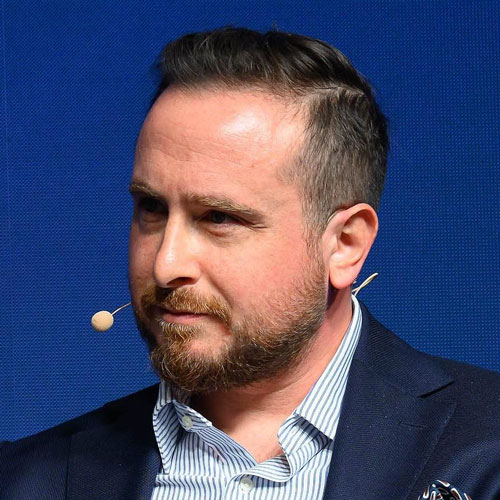
Can Akcal
Treasury manager
Delivery HeroCan Akcal completed his academic education at Hacettepe University, graduating with a degree in Economics. Can Akcal began his career as a Financial Consultant at Avivasa before transitioning to corporate finance in 2011 with Zorlu Energy Group, where he built a strong foundation in cash management and risk management. He later expanded his expertise at Yildiz Holding as a Finance Credit Executive in Group Treasury, handling complex, group-level credit strategies.
He continued to advance his treasury career through roles of increasing responsibility, serving as Treasury Manager at Koton and as Regional Treasury Coordinator for the MENA region at Atlas Copco. This journey has provided him with deep experience across diverse sectors, including Energy, FMCG, Textile Retail, and Manufacturing.His path eventually led him to the online food ordering and delivery sector with Yemeksepeti, the Turkish subsidiary of Delivery Hero. Over two years, he successfully built the treasury function from the ground up, establishing and leading the team and its structure.
In April 2024, he relocated from Istanbul to Berlin to join the Global Treasury Team at the Delivery Hero headquarters. In his current role as Treasury Manager, he leads key functions with his team, including cash management, trade finance, and user management, driving the company’s focus on digitalization, automation, and highly scalable global solutions.
September 17th 2026 -
Treasury 'on chain': blockchain revisited
Case studies
Prioritise this update on using smart contracts and distributed ledger technology for value transfer.
While the initial hype around blockchain has faded, the technology is now finding standard protocols in supply chain, trade finance and repo market contexts. Smart contracts on private blockchains are providing secure platforms for transactions, offering transparency while reducing fraud risk for multiple suppliers and banks. This session brings treasurers up to speed on what’s new for the on-chain treasury, including the transfer of value between counterparties through distributed ledger technology. Treasurers will discuss how these protocols are evolving as digital currencies, stablecoins and tokenised assets become more prevalent.
Education and training for new treasury professionals
Panel discussion
New-to-treasury professionals can learn how technology and AI are redefining the profession.
Recruiting the next generation of treasury talent is an increasing challenge, as finance graduates from top universities are in high demand across corporate finance disciplines. Whilst treasury is gaining recognition as a distinct discipline in university finance courses, companies increasingly must also provide ongoing internal training to new finance professionals to keep pace with treasury innovation. Treasurers discuss the ascendancy of treasury as a profession and the specific skills needed for the future. The panel will also consider the role of technology and AI in treasury training, the new skills required for modern treasurers, and the challenges of succession planning as treasury leaders retire.
-
Wagner Birochi
Treasury director
Puig
X

Wagner Birochi
Treasury director
Puig
Wagner Birochi is a Treasury Senior Director at Puig, based in Switzerland, leading credit risk and global treasury activities including cash management, financial risk, and banking strategy. He brings extensive experience across blue-chip companies such as BASF, Monsanto (now part of Bayer), Syngenta, and Puma Energy, having held various senior finance roles across different industries.
September 17th 2026-
12.00pm -12.45pmEducation and training for new treasury professionals
-
-
Nuria Pascual Lapeña
CVP corporate treasury and risk management, investor relations and sustainability officer
Grifols
X

Nuria Pascual Lapeña
CVP corporate treasury and risk management, investor relations and sustainability officer
Grifols
September 17th 2026-
12.00pm -12.45pmEducation and training for new treasury professionals
-
-
Blanca Goni
Head for southern, central & eastern europe for global payments
HSBC
X

Blanca Goni
Head for southern, central & eastern europe for global payments
HSBC
September 17th 2026-
12.00pm -12.45pmEducation and training for new treasury professionals
-
Change management: enabling strategic alignment
Panel discussion
See how proactive communication and strategic partnerships break down functional treasury silos.
Moving treasury from a functional silo to a strategic partner requires a proactive approach to communication and organisational alignment. Treasurers increasingly nurture effective relationships with heads of business units, technology teams, and finance colleagues to align financial strategies with operational goals. This session addresses the change management skills needed to break down silos and ensure the business understands and aligns in treasury processes. The panel will highlight best practices in internal strategic partnerships and how they lead to improved data accuracy, workflow efficiency, and value creation.
-
Daniel Jefferies
VP, treasurer
The Boots GroupX

Daniel Jefferies
VP, treasurer
The Boots GroupDaniel Jefferies is a highly qualified professional with extensive global leadership experience in Treasury, Tax, Corporate Finance and Insurance. He is a Fellow of both the Association of Chartered Certified Accountants (ACCA) and the Association of Corporate Treasurers (ACT). In addition, he holds an MBA from the University of Southampton. Over the years, he has built a broad expertise across several of industries, including pharmaceuticals, telecommunications, manufacturing, financial services and chemicals, among others. Prior to joining The Boots Group, he served as VP of Treasury and Tax at Mundipharma, a global pharmaceutical company, where he successfully established global treasury, tax, insurance and corporate finance functions, significantly improving the company’s financial operations. He has also held senior roles at Equiniti Group plc, Worldpay Ltd, EE Ltd, Pirelli and Ineos, among others, providing him with vast experience in navigating complex financial environments and leading teams through significant corporate transformations.
September 17th 2026-
12.00pm -12.45pmChange management: enabling strategic alignment
-
-
Winny Li
Group treasurer
PPDX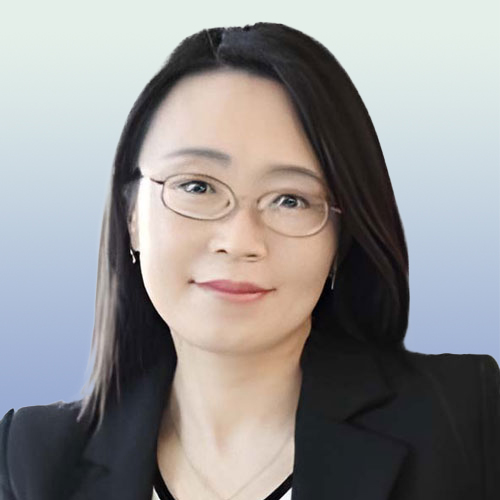

Winny Li
Group treasurer
PPDWinny Li is the Group Treasurer at PPD, part of Thermo Fisher Scientific, having graduated from the University of Cambridge with an MPhil, Distinction in Management Studies in 1998. Winny started her finance career at Arthur Andersen and Deloitte, where she worked in many industries and become a qualified Chartered Accountant now a fellow Chartered Accountant. This provided valuable experience, leading Winny to working for the global media enterprise, Viacom. At Viacom, she travelled extensively, accumulating further management consulting expertise whilst working in different business and cultural settings. Almost 20 years ago, Winny joined the fast-growing pharmaceuticals company PPD. She contributed to the significant growth of the company including in M&A, delisting, IPO and market expansions. Winny worked as a Global Executive Finance Director then later took on further professional training with professional Treasury organisation ACT and set up PPD’s Treasury Function. In a past interview, Winny was described as ‘having a willingness to up sticks and move to where the action is, Winny Li’s career has all the hallmarks of the exemplary 21st-century treasurer and finance leader.
September 17th 2026-
12.00pm -12.45pmChange management: enabling strategic alignment
-
-
Sunnie Ho
Head of global cash operations
AtlassianX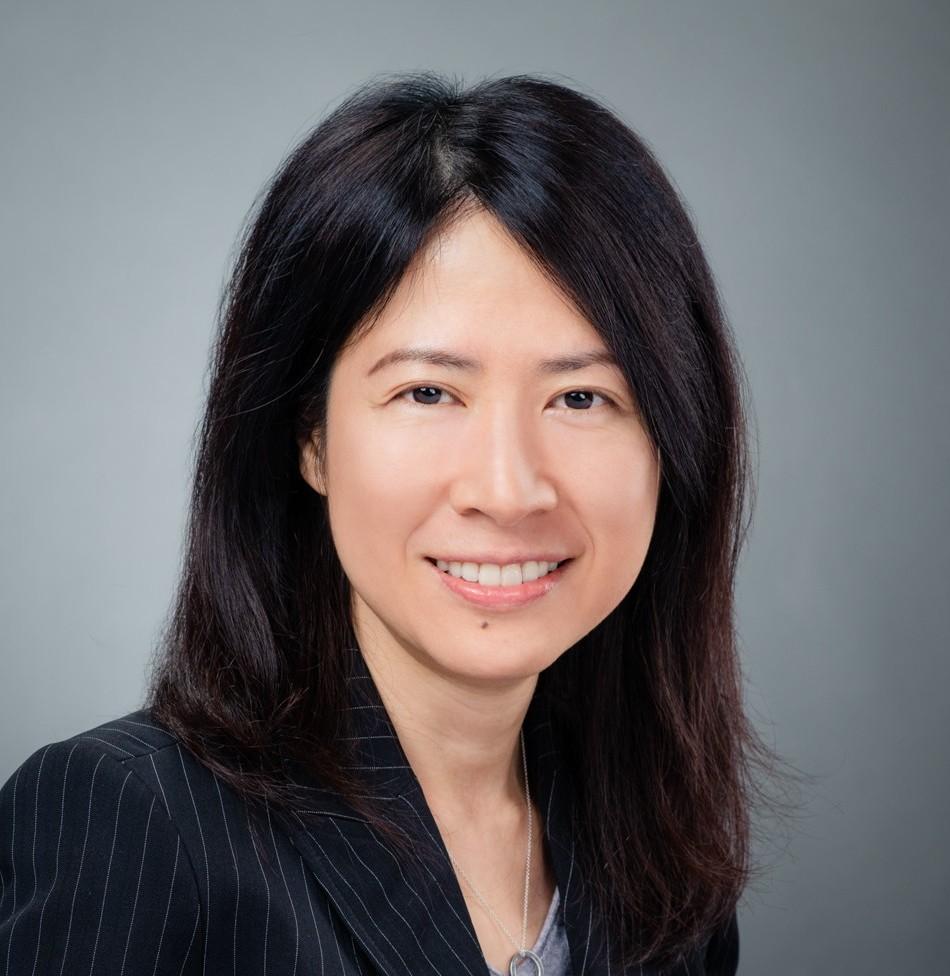

Sunnie Ho
Head of global cash operations
AtlassianSunnie Ho is a Corporate Treasury professional with extensive expertise in liquidity management and commerce payments. She joined Atlassian in 2023 as Head of Global Cash Operations, following an accomplished 15+ year tenure with Microsoft Treasury. She holds an MBA from the University of Washington.
September 17th 2026-
12.00pm -12.45pmChange management: enabling strategic alignment
-
SCF: aligning suppliers and optimising programmes
Presentation
Share knowledge on implementing effective supply chain finance programmes to inject liquidity.
Supply chain finance (SCF) is expanding as a way for buyers and suppliers to align for mutual working capital uplift. By leveraging technology platforms, treasurers can automate invoice processing and accelerate payments for their suppliers. This session examines how SCF is evolving across the payables landscape, allowing for greater liquidity and tailored working capital solutions for buyers and sellers. Treasurers share their insights into implementing effective SCF programmes that inject liquidity across markets while enhancing the transparency and security of the supply chain.
Cash repatriation solutions for complex countries
Case study
Explore more ways to extract cash from complex markets.
When discussing repatriated cash, treasurers say that they spend a disproportionate amount of time on freeing cash trapped in complex countries. Regulations in many developing and emerging economies limit the accessibility of funds for repatriation to foreign jurisdictions. Hard currency swaps are a typical solution with regulatory limitations and associated costs, and central banks can implement restrictions on dollar outflows. Repatriation paths such as dividend payments, intercompany netting and loans, or fees, all come with potential restrictions and local regulations. In this session we showcase the innovative approach of repatriation and cross border liquidity solutions with treasurers who frequently face challenges in highly regulated countries like India.
-
Stefan Windisch
Global head inhouse bank
Roche
X

Stefan Windisch
Global head inhouse bank
Roche
Stefan Windisch is currently the Global Head of InHouse Bank at F. Hoffmann-La Roche Ltd. in Basel, Switzerland. Roche, a family-owned multinational corporation, is one of the world’s largest biotech companies with a presence in over 150 countries.
Before assuming his current role, Stefan spent over a decade as a Senior Cash Manager in Treasury Operations at Roche. Prior to joining Roche, he gained valuable experience as a Financial Controller at an FMCG company and a leasing firm in the UK and Germany.September 17th 2026-
12.00pm -12.45pmCash repatriation solutions for complex countries
-
-
Miguel Trapero
FX and affiliate financing manager
RocheX
Miguel Trapero
FX and affiliate financing manager
RocheSeptember 16th 2026-
03.15pm -04.00pmAI innovation in FX and ALM at Roche
-
12.00pm -12.45pmCash repatriation solutions for complex countries
-
Lunch
The lunch breaks, held next to the exhibition area, offer a relaxed setting to recharge and reflect on the morning’s sessions. Enjoy a meal while continuing conversations and discovering new ideas in an informal atmosphere.
Lunch
The lunch breaks, held next to the exhibition area, offer a relaxed setting to recharge and reflect on the morning’s sessions. Enjoy a meal while continuing conversations and discovering new ideas in an informal atmosphere.
Lunch
The lunch breaks, held next to the exhibition area, offer a relaxed setting to recharge and reflect on the morning’s sessions. Enjoy a meal while continuing conversations and discovering new ideas in an informal atmosphere.
Lunch
The lunch breaks, held next to the exhibition area, offer a relaxed setting to recharge and reflect on the morning’s sessions. Enjoy a meal while continuing conversations and discovering new ideas in an informal atmosphere.
Lunch
The lunch breaks, held next to the exhibition area, offer a relaxed setting to recharge and reflect on the morning’s sessions. Enjoy a meal while continuing conversations and discovering new ideas in an informal atmosphere.
Lunch
The lunch breaks, held next to the exhibition area, offer a relaxed setting to recharge and reflect on the morning’s sessions. Enjoy a meal while continuing conversations and discovering new ideas in an informal atmosphere.
Lunch
The lunch breaks, held next to the exhibition area, offer a relaxed setting to recharge and reflect on the morning’s sessions. Enjoy a meal while continuing conversations and discovering new ideas in an informal atmosphere.
Lunch
The lunch breaks, held next to the exhibition area, offer a relaxed setting to recharge and reflect on the morning’s sessions. Enjoy a meal while continuing conversations and discovering new ideas in an informal atmosphere.
Developing treasury and transaction banking with digital assets
Panel discussion
Explore how banking partners are evolving products and services in the era of digital assets.
Transaction and treasury banking services are shifting as digital assets evolve from experimental instruments to core institutional infrastructure. The rise of stablecoins, now surpassing a $300 billion issuance, and tokenized deposits enables 24/7 instantaneous settlement that bypasses the friction of traditional correspondent banking. For corporate treasurers, digital assets promise precision in automated cash forecasting and liquidity management. This shift to faster tokenised payments enables treasury to go ‘on chain,’ activate smart contracts and integrate blockchain workflows to deliver atomic settlement and multi-currency liquidity pools in real-time. As regulatory frameworks and global standards evolve, digital assets are gaining increasing use cases and applications in treasury and transaction banking, enabling new approaches to cash, FX, liquidity, payments, and risk management. *Here banks discuss how services are changing in the era of digital assets.
-
Ankur Kanwar
Regional head, TB and cash, ASEAN, global head, cash structured solutions
Standard Chartered Bank
X

Ankur Kanwar
Regional head, TB and cash, ASEAN, global head, cash structured solutions
Standard Chartered Bank
22 years of experience in Transaction Banking, Treasury and Finance across markets in Asia and USA.Ankur leads in strategy and execution for the Transaction Banking business across Singapore and ASEAN markets. He also leads the Structured Solutions Development team globally for Cash management, and is deeply entrenched in new client solutions, regulatory changes as well as emerging trends across ASEAN. He leads a global team of seasoned professionals from the treasury and finance industry, building new and innovative structured cash management solutions.Since joining Standard Chartered, Ankur has worked with a number of large corporate clients to enhance the efficiency of their cash and treasury management operations. He has also been instrumental in launching a variety of innovative digital solutions, and is a key influencer of new technology adoption in the industry. He is a regular speaker at industry events and has authored a number of thought leadership articles across mainstream broadsheets and industry journals.Prior to joining Standard Chartered Bank, Ankur was with JP Morgan Chase in Singapore and New York, where he led the product management function for Transaction Banking regulatory products and worked extensively with large corporate clients to streamline their liquidity management structures.Ankur also has expertise in Treasury management, leading in balance sheet hedging, funding strategies, engagement with capital and funding divisions as well as assessments for clients on regulatory changes.He is a Chartered Accountant from India and holds a Chartered Financial Analyst (CFA) qualification.
September 17th 2026-
02.00pm -02.45pmDeveloping treasury and transaction banking with digital assets
-
-
Anna Tavano
Head of banking, Continental Europe
HSBCX

Anna Tavano
Head of banking, Continental Europe
HSBCSeptember 17th 2026-
02.00pm -02.45pmDeveloping treasury and transaction banking with digital assets
-
FX automation and hedging
Roundtable
Gathering ideas on how to best align, automate, derisk and hedge FX processes.
FX is managed with a variety of tools in treasury and so in this discussion delegates share their current FX technology setup, and their challenges in developing FX system capabilities to execute and automate transactions in range of currency pairs, whilst optimising FX hedging strategies. Discussion also focuses on the challenges of hard to hedge exotic currencies, dollar weakening and euro markets.
AI case study
Case study
Session description tbc.
The evolution of people and operations in treasury automation
Panel discussion
As workflows automate, how will treasury teams and operations evolve?
Treasury workflows are changing rapidly. Transformational technologies, such as AI, RPAs and automated workflows, real-time APIs, tokenisation, and data lakes, are reshaping treasury organisations and redefining the treasurer’s role. Now, as digital treasury gains strategic importance in corporations, the emphasis for treasury is on technical skills as well as traditional financial expertise. Automated workflows in cash and liquidity management, FX operations, payments and reconciliation are replacing manual interventions and reporting, reducing tasks from days to hours. Organisational and operational transformation involves integrating the cloud TMS and ERP ecosystems, which delivers enterprise-wide visibility into treasury data and accelerates decision-making in cash and liquidity operations. These technologies have triggered a shift in people development, requiring treasury professionals to upskill in technical competencies to keep pace with digital transformation and deliver both financial expertise and technical proficiency in automated workflows. In this session we dive into how the treasury, both organisationally and in people development, is reinventing itself in the digital and AI era.
-
Matthieu Meunier
SVP financing and group treasurer
Schneider ElectricX

Matthieu Meunier
SVP financing and group treasurer
Schneider ElectricSeptember 17th 2026-
02.00pm -02.45pmThe evolution of people and operations in treasury automation
-
-
Garima Thakur
Treasurer
Creative Artists AgencyX

Garima Thakur
Treasurer
Creative Artists AgencyGarima Thakur is a seasoned Senior Treasury and Finance Executive with extensive expertise in global treasury management, capital markets, corporate finance and risk management. With a distinguished career spanning multiple industries, she has consistently delivered strategic leadership and financial acumen at the highest levels. Garima’s illustrious career includes pivotal roles such as Global Treasurer for TaylorMade Golf Company, a prominent multinational in the sporting goods sector, where she orchestrated comprehensive treasury initiatives. She also served as Assistant Global Treasurer and Executive Director at Ingram Micro, a publicly traded global leader in technology and supply chain services, where her financial stewardship contributed significantly to the company’s growth and success. Currently holding the esteemed position of Global Treasurer and Risk Leader at Creative Artists Agency (CAA), one of the foremost entertainment and sports agencies globally, Garima spearheads financial, capital and risk strategies to support the agency’s growing global operations. Throughout her career journey, Garima has held key treasury management positions at esteemed organizations including Western Union, United Online, and LPL Financial. Her areas of expertise encompass cash management, global payments, working capital optimization, corporate finance, capital markets, insurance, AI, crypto, foreign exchange risk management, hedge accounting, supply chain finance, treasury technology implementations, mergers and acquisitions, and corporate development. Garima Thakur’s track record of excellence, coupled with her relentless pursuit of innovation, underscores her status as a preeminent leader in the field of global finance and treasury management.
September 17th 2026-
02.00pm -02.45pmThe evolution of people and operations in treasury automation
-
Creating integrated payment ecosystems for working capital management
Panel discussion
Creating working capital visibility by integrating cards and payment systems.
Treasury is rapidly upgrading payments infrastructure with real-time ecosystems. Core to this transformation is leveraging virtual card technologies, to achieve instant settlement and real time data visibility. Card technologies facilitates an environment where multiple payment rails can work together, with technical integration of payments data into ERP systems, allowing treasurers to unify payables into a single viewpoint. Here we discuss how cards, when integrated with interoperable payment solutions, can create active cash flow controls, enabling real time liquidity and working capital management.
-
Sofo Limniotis
Fintech strategy and solutions director
HBX GroupX

Sofo Limniotis
Fintech strategy and solutions director
HBX GroupSofoklis is a highly experienced financial services & travel payments executive, with a strong track record in driving large scale transformation initiatives and delivering growth. He joined HBX Group 13 years ago and currently leads the Fintech vertical since 2025. He is a passionate advocate of the transformative value that embedded finance and insurtech can bring to the travel ecosystem. He builds and develops solutions with a strong customer centric approach and encompasses broad networks and long term partnerships to align market needs and bring mutually beneficial value to industry agents. In the early days of his professional career he held several advisory roles in the consulting space, at KPMG, Bearingpoint and PwC. Throughout a decade, he acquired extensive experience by harnessing technology to transform the finance and operations functions and deliver genuine commercial results. He holds a B.A in Economics from the West London University and an Executive MBA from Esade.
September 17th 2026 -
-
Jamie Evans
Head of corporate issuing – ICB UK specialist sales
BarclaysX

Jamie Evans
Head of corporate issuing – ICB UK specialist sales
BarclaysJamie Evans is a senior payments leader at Barclays, where he currently heads Commercial Issuing for International Corporate Banking.
With over two decades at Barclays, Jamie has held a variety of senior, client‑centric leadership roles across the payments ecosystem, spanning acquiring, issuing, payment gateways, and fraud solutions.He brings deep expertise in helping multinational organisations optimise their payments strategies, design scalable commercial models, and navigate the evolving global payments landscape. Jamie has extensive experience working with complex clients and partners across multiple markets, driving sustainable growth through innovation, strong client coverage, and strategic partnerships.
Jamie is passionate about building commercially focused teams and delivering differentiated, value‑adding payment propositions for clients worldwide.
September 17th 2026 -
Combatting fraud and cybercrime with AI systems
Presentation
Visionary insight into revolutionising fraud detection using AI to flag payment workflow anomalies.
As payment technologies become faster and more integrated, the complexity of fraudulent methods deployed by bad actors has reached new heights. This session highlights the pivotal role of technology in defending the treasury against check tampering, sophisticated cyberattacks, and innovative scams. The discussion focuses on how advances in artificial intelligence and machine learning are revolutionising fraud detection by analysing vast amounts of data to flag anomalies in real-time. Treasurers will share insights into identifying red flags in payment and collection workflows and the collaborative efforts required with risk teams to mitigate threats.
-
Antonios Reizopoulos
Head of treasury
Nomios Group
X

Antonios Reizopoulos
Head of treasury
Nomios Group
Antonios Reizopoulos is head of Treasury at Nomios Group, where he is building a modern, control-focused treasury function across an international organisation. He leads initiatives to enhance cash visibility, strengthen payment governance, and optimise banking infrastructure, with a strong focus on mitigating fraud and operational risks. With over 15 years of experience in corporate treasury and banking, he specializes in treasury transformation, liquidity management, and designing robust control frameworks in complex, multinational environments.
September 17th 2026-
02.00pm -02.45pmCombatting fraud and cybercrime with AI systems
-
Bank account rationalisation: creating cash 360
Case studies
Find out how bank account consolidation provides the clarity needed for accurate forecasting.
Many treasurers are currently engaged in bank account consolidation exercises, often reducing the number of global accounts from several hundred to a handful of key business accounts. The benefits of this less is more approach are clear: it offers greater cash visibility, reduces transaction costs, and simplifies pooling and netting activities. This session focuses on the Cash 360 concept, where account rationalisation provides the clarity needed for accurate cash forecasting and liquidity planning. Treasurers will talk through the process, identifying common pain points and the role of virtual accounts in streamlining banking operations.
Working the balance sheet for capital: tested techniques
Case study
Listen to unique techniques for bolstering working capital by identifying under-utilised balance sheet assets.
Treasury and financial planning colleagues are increasingly focused on managing short-term assets for liquidity to avoid the elevated costs of external borrowing. By partnering with business managers, treasurers can identify under utilised assets, from receivables to real estate, on the balance sheet to provide liquidity when needed by the business. Treasurers explore tested techniques for bolstering working capital positions, including the optimisation of cash conversion and the strategic alignment of DPO/DSO cycles. Treasurers will discuss how a detailed analysis of assets across business units can provide the visibility required to maximise internal working capital efficiency.
-
James Marshall
Head of treasury
Virgin Media
X

James Marshall
Head of treasury
Virgin Media
September 17th 2026-
02.00pm -02.45pmWorking the balance sheet for capital: tested techniques
-
Leveraging receivables for working capital gains
Panel discussion
Peer learning on accelerating cash conversion through invoice factoring and automated collection processes.
Receivables financing offers innovative solutions to accelerate cash conversion by monetising outstanding invoices and reducing days sales outstanding (DSO) to improve the volume of working capital. Treasurers here discuss their recent activities in invoice factoring and dynamic discounting, and their decision making processes and risk tolerances in receivables instruments. We also explore how recent technological advancements are automating receivables processes, making collections more transparent, accessible, and efficient for suppliers and buyers. relationships. Treasurers will share practical use cases where receivables financing has provided immediate liquidity to support business needs.
-
Abhishek Abhishek
Global head B2B acceptance
VisaX

Abhishek Abhishek
Global head B2B acceptance
VisaAbhishek is the Global Head of B2B Acceptance at Visa. He has 15 years of experience with commercial payments growing the network of B2B suppliers, launching innovative solutions, enablement and analytical tools for financial institutions and corporates. A Goto expert on commercial acceptance & B2B payments, Abhishek is one of the executives with experience across the entire payment ecosystem, working directly with corporates on receivables and payables, financial institutions, acquirers and merchants. Abhishek is currently addressing working capital needs of some of the largest corporates globally through commercial payment rails and responsible for growing the network with commercial card accepting suppliers. Based in New York, Abhishek joined Visa in 2019 from American Express where he spent 10 years building the travel consulting and the B2B payments businesses Before that he was at McKinsey & Co., serving fortune 100 companies on operations strategy, product development, manufacturing, and procurement.
September 17th 2026-
02.45pm -03.30pmLeveraging receivables for working capital gains
-
-
Juli Tecles
Financial manager
Borges International GroupX

Juli Tecles
Financial manager
Borges International GroupJuli TECLES Juli Tecles serves as the Financial Manager of Borges International Group, a distinguished leader in spreading the Mediterranean Lifestyle and delivering High-Quality Food worldwide, establishing itself as a prominent player in the global food industry. With a substantial background in finance and a proven track record in strategic financial management, Juli plays a crucial role in driving the company’s financial success.Juli Tecles holds a degree in Business Administration from the Universitat de Barcelona (UB) and earned his Master’s in Finance from Universitat Pompeu Fabra (UPF), further enhancing his financial expertise. Notably, he is not just a seasoned financial executive but also an academic enthusiast, colaborating as a Finance teacher in the MBA program at Universitat Rovira i Virgili.Beyond his responsibilities at Borges International Group, Juli Tecles is highly engaged in the financial community. He serves as the Vice President of ASSET ( https://asset.es/ ) the Spanish Association of Corporate Financial Managers and Treasurers, which is in association with EACT (the European Association of Corporate Treasurers). This position underscores his commitment to advancing the profession and promoting collaboration among financial experts in Spain. Furthermore, he is a founding partner of Civicai ,( https://civicai.cat/en/ ) an association dedicated to ensuring free access to AI while advocating for its ethical development and meaningful societal integration for the collective good. Civicai embodies his dedication to innovation and social impact, harnessing technology to address pressing societal challenges.Juli Tecles’ remarkable combination of academic achievements, industry leadership, and entrepreneurial spirit defines him as a dynamic force in the finance world. His unwavering commitment to optimizing financial performance, fostering industry collaboration, and driving social change sets a high standard for aspiring finance professionals. Juli Tecles has dedicated 26 years of his career to Borges International Group, consistently playing a pivotal role in the company’s growth and financial success, solidifying its position as a leader in the Mediterranean diet nutrition industry, especially with products such as Olive oil and Dry nuts.” meaningful societal integration for the collective good. Civicai embodies his dedication to innovation and social impact, harnessing technology to address pressing societal challenges.
Juli Tecles’ remarkable combination of academic achievements, industry leadership, and entrepreneurial spirit defines him as a dynamic force in the finance world. His unwavering commitment to optimizing financial performance, fostering industry collaboration, and driving social change sets a high standard for aspiring finance professionals. Juli Tecles has dedicated 26 years of his career to Borges International Group, consistently playing a pivotal role in the company’s growth and financial success, solidifying its position as a leader in the Mediterranean diet nutrition industry, especially with products such as Olive oil and Dry nuts.
September 17th 2026-
02.45pm -03.30pmLeveraging receivables for working capital gains
-
-
Paula Bruni
Treasurer
Aleph Group, Inc
X
Paula Bruni
Treasurer
Aleph Group, Inc
September 17th 2026-
02.45pm -03.30pmLeveraging receivables for working capital gains
-
Sustainability finance partnerships
Case studies
Focus on treasury activities in delivering financing in sustainable loan markets.
Exploring the treasurer’s role in the practical execution of sustainable finance within an emerging market context. This session will explore how Enerjisa, one of Turkey’s largest independent power producers (IPPs), has leveraged strong emerging market benchmarks for capital-intensive energy infrastructure to commit over $2 billion in investments, with a dedicated focus on expanding its large and diversified renewable energy portfolio. The case study will highlight the scale of financing required for the energy transition. Focusing on the strategic emphasis on green financing instruments, including the use of green loans and sustainability-linked financing, the treasurer will illustrate how partnerships with banks in raising capital for energy investments, is accelerating the green transition in emerging markets. This unique treasury centred case study provides real world insights in raising sustainable finance, to achieve ambitious results.
-
Veli Ahmed Yumuk
Head of treasury and corporate finance
Enerjisa ÜretimX

Veli Ahmed Yumuk
Head of treasury and corporate finance
Enerjisa ÜretimVeli is the head of Corporate Finance & Treasury at Enerjisa Uretim, where he manages long-term project financing, working capital, and off-balance hedging activities. Over the past few years, he has secured more than $2 billion in financing for large-scale wind projects, collaborating with major DFIs, Multilaterals, ECAs, and global banks. Veli’s innovative work in sustainable finance earned him the Adam Smith Award for Best Sustainable Treasury Solution. Before joining Enerjisa Uretim, he worked in the capital markets department of a private bank. Veli holds a master’s degree in business & economics and is a CFA Charterholder.
September 17th 2026-
02.45pm -03.30pmSustainability finance partnerships
-
Cash management technologies
Roundtable
Real world examples on developing real time automated cash management systems. Exploring how treasurers are aligning systems, data, and processes to create real-time automated cash management reporting to enhance cash visibility across the business.
AI case study
Case study
These sessions provide a deep dive into practical, recent use cases and applications of AI currently being put to work to solve specific treasury problems, from coding to reporting.
-
Anita Mehra
Independent treasury professional
X
Anita Mehra
Independent treasury professional
Anita Mehra, PhD, is a globally recognized finance and capital markets executive, board director, and strategic advisor with nearly three decades of leadership spanning treasury, enterprise risk, AI-enabled finance transformation, and long-range capital strategy. She brings deep board-level expertise in fiduciary oversight, balance sheet governance, strategic capital deployment, and infrastructure investment, with a strong record helping boards and executive teams navigate growth, business and culture transformation, and periods of market disruption. Most recently, Dr. Mehra served as Corporate Vice President, Global Treasury & Financial Services at Microsoft, where she led one of the world’s most sophisticated treasury and financial services organizations driving culture and talent development initiatives across finance, and served as exec-sponsor for customer and partner engagements. Her responsibilities included oversight of global investment portfolio, debt capital markets, cash management, currency risk, business insurance, customer credit and collections, global payments strategy, and customer and vendor financing in support of Microsoft’s accelerated Cloud and AI expansion. Across her tenure at Microsoft, Dr. Mehra held progressively senior leadership roles and led the inaugural debt issuance culminating in more than $250B of financing to enable Microsoft’s cloud and AI growth initiatives. She provided strategic direction through evolving global financial market regulations, served in fiduciary roles, built high-performance teams to deliver risk management strategy, global payments innovation, and financial platform modernization across more than 100 countries. A recognized industry authority in technology-enabled treasury transformation, Dr. Mehra led implementation of machine learning, GenAI, and Copilot solutions across cash flow forecasting, credit risk, FX, cross-border payments, and customer engagement—modernizing core finance operations at enterprise scale. She is a frequent speaker at leading treasury, banking, and finance forums and is widely regarded as a thought leader shaping the future of modern treasury. Dr. Mehra’s board experience includes service as President of the Board of Trustees of The Overlake School, Advisory Board Member for The Economist’s Global Treasury Leaders Program, and prior board service with nonprofit and educational institutions. Her governance experience spans fiduciary oversight, strategic planning, finance committee leadership, risk management, and executive leadership development.
September 17th 2026-
02.45pm -03.30pmAI case study
-
Data: analytics, alignment and accessibility for treasury systems
Case study
Instructional insight into applying SQL and PowerBI to elevate the treasury’s strategic role.
Data visualisation has become a preoccupation for treasurers seeking to produce data-rich reporting that is of strategic use for cash management and liquidity planning. Software applications like PowerBI, alongside SQL commands and programming, are now key tools in the smart treasury kit. This session discusses best practices in data management, including the use of data pools or lakes to ensure that financial information is accessible and aligned with strategic treasury objectives. Treasurers who have mastered these tools discuss how they have applied data analytics to elevate treasury as a strategic business partner through timely and high quality reporting, to enable better informed decision-making in the business.
-
Mohamed Torayah
Regional treasury leader – Middle East, Africa, Turkey and Pakistan
GE VernovaX

Mohamed Torayah
Regional treasury leader – Middle East, Africa, Turkey and Pakistan
GE VernovaMohamed Torayah is an accomplished finance leader with 17 years of deep industry expertise spanning diverse finance roles. Currently, i lead the Cash and Banking organization for GE Vernova across the Middle East, Africa, Turkey, and Pakistan (METAP) region, driving treasury and financial excellence across 45 complex and dynamic markets. A recognized expert in regional treasury management, banking relationships, and operational resilience, he brings a wealth of practical insights on managing large-scale financial operations across emerging and high-growth markets.
September 17th 2026-
02.45pm -03.30pmData: analytics, alignment and accessibility for treasury systems
-
Commercial cards: enhancing payment rail interoperability
Case studies
Understand priorities for integrating virtual card data into core reporting for holistic visibility.
Commercial cards are playing an increasingly important role in the B2B payments revolution, particularly through virtual cards and embedded finance solutions. These tools offer an alternative to traditional ACH and SWIFT payments, providing immediate settlement and rich data for reconciliation. This session discusses how commercial cards can enhance interoperability between different payment rails and provide a flexible solution for high-frequency, lower value transactions. The panel will cover how treasurers are integrating card data into their core reporting to achieve a more holistic view of their payables and generate working capital flows.
Hedging and derivatives in energy markets
Case studies
Innovative hedging solutions for mitigating risks.
With a heightened focus on ESG, climate related risk and energy security, companies are looking to hedging solutions, to reduce risk and manage supply. One approach is to use energy related derivatives, such as virtual power purchase agreements (VPPAs), to extend hedging strategies to mitigate energy risk and support longer term sustainability commitments. In this session we discuss two case studies on how treasury works together with procurement, legal, accounting and risk teams to align on governance strategies towards Scope and ESG goals.
-
Ian Griffith
Group treasury director
Ahold DelhaizeX

Ian Griffith
Group treasury director
Ahold DelhaizeSeptember 17th 2026-
02.45pm -03.30pmHedging and derivatives in energy markets
-
-
Jozef Polak
Senior treasury manager
European EnergyX

Jozef Polak
Senior treasury manager
European EnergySeptember 17th 2026-
02.45pm -03.30pmHedging and derivatives in energy markets
-
Virtual accounts: accelerating visibility with APIs
Panel discussion
Share knowledge on achieving real-time data exchange between virtual accounts and TMS using APIs.
Interest in virtual accounts is rising as treasurers seek to improve cash visibility and simplify their bank account structures without losing reporting granularity. By utilising application programming interfaces (APIs), treasurers can now achieve near real-time data exchange between these virtual structures and their core treasury management systems (TMS). Treasurers in this session explore how the combination of virtual account management and API technologies accelerates visibility into global cash positions, enabling faster forecasting and visibility into real time liquidity. The panel will also discuss the technical challenges of integrating these tools with legacy banking infrastructure, as well as interoperability and aggregation challenges and solutions.
Break
The networking breaks, held in the exhibition area, are your opportunity to network with peers, industry leaders, and solution providers and discuss new ideas sparked by the sessions. Maximise your time by booking one-on-one meetings in advance through the app.
Break
The networking breaks, held in the exhibition area, are your opportunity to network with peers, industry leaders, and solution providers and discuss new ideas sparked by the sessions. Maximise your time by booking one-on-one meetings in advance through the app.
Break
The networking breaks, held in the exhibition area, are your opportunity to network with peers, industry leaders, and solution providers and discuss new ideas sparked by the sessions. Maximise your time by booking one-on-one meetings in advance through the app.
Break
The networking breaks, held in the exhibition area, are your opportunity to network with peers, industry leaders, and solution providers and discuss new ideas sparked by the sessions. Maximise your time by booking one-on-one meetings in advance through the app.
Break
The networking breaks, held in the exhibition area, are your opportunity to network with peers, industry leaders, and solution providers and discuss new ideas sparked by the sessions. Maximise your time by booking one-on-one meetings in advance through the app.
Break
The networking breaks, held in the exhibition area, are your opportunity to network with peers, industry leaders, and solution providers and discuss new ideas sparked by the sessions. Maximise your time by booking one-on-one meetings in advance through the app.
Break
The networking breaks, held in the exhibition area, are your opportunity to network with peers, industry leaders, and solution providers and discuss new ideas sparked by the sessions. Maximise your time by booking one-on-one meetings in advance through the app.
Break
The networking breaks, held in the exhibition area, are your opportunity to network with peers, industry leaders, and solution providers and discuss new ideas sparked by the sessions. Maximise your time by booking one-on-one meetings in advance through the app.
AI‑assisted commercial paper execution in action
Case study
To support Medtronic’s short-term debt program, treasury developed an AI-enabled assistant for commercial paper issuance. The AI assistant monitors markets, consolidates bank indications, and tracks internal liquidity events, so treasury has a decision-ready view of funding options. When needed, a short chat prompt (“issue 50M ~2 weeks out”) triggers the AI assistant to recommend pricing, bank, and tenor, then assemble a review-ready execution package – draft emails, response tracking, file updates, and trade notifications – while keeping humans in control of approvals and decisions. In short, the AI solution “jump-starts” the end-to-end workflow, reducing manual work, so the team can focus on decision-making and execution.
-
Tim Husnik
Senior treasury director
MedtronicX

Tim Husnik
Senior treasury director
MedtronicSeptember 17th 2026-
04.15pm -05.00pmAI‑assisted commercial paper execution in action
-
Treasury teams and talent development
Roundtable
Huddle and hear how teams are changing up in the AI era. Treasury requires an increasing mix of skills and expertise in finance and technology, so what does the ideal treasury team look like now? Are treasury leaders prioritising finance knowledge or technology and data skills, or both, and do we still emphasise D&I in the current environment?
Next level API implementation for interconnectivity
Case studies
Peer learning on standardising APIs across banking partners for seamless multi-channel connectivity.
Application programming interfaces (APIs) are becoming the standard code tools for secure, real-time data exchange between banking portals and TMS systems, yet they lack uniformity. This session addresses the current challenges of standardising APIs across multiple banking partners to achieve seamless interoperability. Treasurers will discuss the technical and budgetary hurdles of building intelligent API systems for multi-channel banking and multi-format payments. The discussion will also cover the pros and cons of using third-party aggregators versus direct host-to-host connections. Treasurers who have successfully resolved API standardisation conflicts will share their next level implementation strategies for creating an interoperable ecosystem.
-
Sandeep Chalke
General manager, corporate treasury
Tata CommunicationsX

Sandeep Chalke
General manager, corporate treasury
Tata CommunicationsI lead the Global Cash Management function at Tata Communications Treasury, overseeing liquidity, funding, and risk management across 40+ jurisdictions from our centralised hub in India. With extensive experience in banking, cash management, and automation initiatives, I’ve played a key role in driving the company’s treasury transformation journey. Before joining Tata Communications, I worked with leading corporate institutions such as Viacom18, Reliance and Tata Play, where I gained deep exposure across corporate treasury, cash operations, and financial systems automation. These roles helped build a strong foundation in global liquidity management, risk governance and digital treasury solutions. My focus on centralisation, digitalisation, and next-generation treasury operating models has delivered measurable impact in areas such as intercompany funding, liquidity optimisation, working capital management, and risk governance. I also work closely with global banking partners, regulators, and technology providers to build a resilient and future-ready treasury ecosystem.
September 17th 2026-
04.15pm -05.00pmNext level API implementation for interconnectivity
-
Developing H2H and A2A technologies in B2B payments systems
Presentation
Strategically manage direct payment flows using account-to-account and host-to-host connection technologies.
Technologies like account-to-account (A2A) payments and direct host-to-host (H2H) connections are gaining traction as treasurers seek more direct control over their payment flows. H2H allows for seamless integration between a company’s ERP and its bank, while A2A utilises open banking protocols to bypass traditional card networks. This session explores the technical requirements for developing these systems and the benefits of reduced transaction costs and faster settlement. Treasurers will discuss the challenge of managing these diverse connections across multiple banking partners in a global treasury environment.
Centralisation vs regionalisation: balancing local ops
Debate
Cut through clarity on balancing central control with the need for local expertise.
The ongoing project of treasury centralisation is focused on delivering operational efficiency and a single view of cash and capital. Yet for many multinational businesses, some degree of regionalisation is necessary to support local suppliers, currency operations, and bank relationships. Here treasurers both central and regional, debate the optimal ways to balance central control with the need for local expertise, especially in countries with complex tax structures or exchange controls. Treasurers will discuss the challenges of operational alignment and how to support the diverse requirements of the business at both a central and local level.
-
Kashaf Jaffer
Head of treasury
Puma EnergyX

Kashaf Jaffer
Head of treasury
Puma EnergyKashaf is a seasoned Corporate Treasury leader with nearly two decades of experience across diverse sectors, including energy, pharmaceuticals, and FMCG. His career spans multiple geographies, such as the Americas, Africa, Europe, and Asia, showcasing his ability to navigate the complexities of International Finance within varied business environments. Currently, Kashaf serves as the Head of Treasury at Puma Energy, a Geneva-based downstream oil and gas company. In his role, he oversees Global Treasury operations with a focus on cash management, debt strategy, and foreign exchange (FX) optimization, while driving key transformation initiatives. These include the implementation of a new Treasury Management System (TMS) and the development of a modern payments infrastructure. Additionally, he manages Puma Energy’s In-House Bank, reinforcing his expertise in strategic liquidity management and corporate financial instruments to deliver prudent funding and investment outcomes. Known for his analytical approach and strong people management skills, Kashaf is recognized as a thought leader in Treasury operations and transformation. Based in Mumbai, he combines financial acumen and impactful leadership to drive efficiency and innovation in Treasury. Kashaf’s contributions to the field have been widely acknowledged, including receiving the prestigious “Rising Star” award at the Adam Smith Asia Awards in 2016.
September 17th 2026-
04.15pm -05.00pmCentralisation vs regionalisation: balancing local ops
-
-
Zeynep Barutcu
Director group treasury & risk management
KLM Royal Dutch AirlinesX

Zeynep Barutcu
Director group treasury & risk management
KLM Royal Dutch AirlinesSeptember 17th 2026-
04.15pm -05.00pmCentralisation vs regionalisation: balancing local ops
-
Designing an optimal capital structure: from theory to real-world decision making
Case studies
Insights on the role of the treasurer in optimising capital structures
Designing an optimal capital structure differs in every treasury. Defining and creating a framework for capital allocation and decision making is an essential project, as treasury elevates from an operational to strategic partner. In this session we hear two case studies. The first, from Zalando, covers defining what ‘optimal’ means for the company through internal and external stakeholder conversations and the steering and allocation tools they developed to define and communicate capital structuring strategies. The case study will focus on a share buy-back program, the treasury’s role in the process, and the lessons learned.
-
Paola Jimenez
Head of capital structure and funding
Zalando
X

Paola Jimenez
Head of capital structure and funding
Zalando
Paola Jimenez is the Head of Capital Structure and Funding at Zalando, where she leads the company’s capital structure strategy, funding, and relationships with financial institutions. She plays a central role in shaping Zalando’s capital allocation framework, with a focus on liquidity resilience, funding flexibility, and long-term credit rating readiness. Her work bridges strategic finance and capital markets execution, including the design of optimal capital structures, share buyback programs, and financing strategies. Paola has extensive experience in treasury and is known for translating complex financial concepts into clear, decision-oriented frameworks for senior leadership. Originally from Colombia, she built her career in Germany and brings an international perspective to corporate finance and capital markets
September 17th 2026 -
-
Sayan Mukherjee
VP, group treasurer
NexperiaX

Sayan Mukherjee
VP, group treasurer
NexperiaSayan Mukherjee is the Group Treasurer for Nexperia a global semiconductor manufacturer and global leader in Discretes, Logic and MOSFETs devices. The company focuses on efficiency and producing consistently reliable semiconductor components at high volumes (more than 100 billion pieces annually). The Company is headquartered in the Netherlands and has more than 13,000 employees across Asia, Europe and the U.S. supporting customers globally. Sayan is responsible for Liquidity Management, Banking Relationships, Financing & Financial Risk Management including Insurance at Nexperia. Prior to this Sayan worked in various finance roles with extensive international experience in large multinational technology companies with a strong focus on value creation. Sayan is an ACA, ACMA, CAIA and an Alumni of London Business School.
September 17th 2026 -
Investments: optimising cash in an uncertain rate environment
Case studies
Benchmark how to deliver optimal investment returns while safeguarding cash as rates move.
Whilst the primary aim of treasury is cash preservation over yield, the current rate environment is uncertain as inflationary pressures persist. Whilst the market keenly monitors central bank policy, treasurers seek to balance their investment activity to deliver yield while maintaining cash and liquidity flows. In this uncertain environment, where rates might move up, hold, or cut, treasurers might seek to minimise interest rate fluctuations through natural hedging, liability matching, fixed rate investments, and interest rate derivatives. Here, treasurers discuss their strategies to manage rate risks across a spectrum of investment instruments, from cash deposits, money market funds and short-dated securities. Treasurers will share how they develop investment risk strategies that align with the company’s risk tolerance and investment mandate and discuss how investment strategies might shift as the rate environment evolves.
-
Agnė Masiulytė
Senior director of finance control and treasury
Vinted
X

Agnė Masiulytė
Senior director of finance control and treasury
Vinted
Agne Masiulyte is a Senior Director of Finance Control and Treasury at Vinted, board member of Vinted Pay. She has 8 years of corporate treasury experience and has led the Vinted treasury team for the last 5 years.September 17th 2026-
04.15pm -05.00pmInvestments: optimising cash in an uncertain rate environment
-
-
Meindert de Vreeze
Global treasury operations
3MX

Meindert de Vreeze
Global treasury operations
3MSeptember 17th 2026-
04.15pm -05.00pmInvestments: optimising cash in an uncertain rate environment
-
Shared services and TaaS: operational partnerships
Presentation
Discover how to evaluate which treasury functions to outsource to shared service centres.
Decisions regarding which treasury functions to outsource to shared service centres (SSCs) and which to keep in-house are in constant review as treasury evolves and automates with technological and operational advances. In consolidating tasks like payments, collections, and FX management into SSCs, treasurers aim to reduce costs, streamline processes, and improve operational efficiency. This session explores the pros and cons of outsourced and shared service models and how they can be scaled as the business grows. Also, the arrival of Treasury-as-a-Service (TaaS) models promises businesses plug-and-play functionality for a suite of treasury management tools in the cloud. Benefits include reduced infrastructure costs, increased efficiency through automation, and scalability for expanding operations. Treasurers will debate which elements of treasury, such as cash, liquidity planning and risk management, should remain in-house, versus what can be outsourced to a shared service partner.
Day 2 ends
Plenary sessions dive into the big picture challenges and opportunities shaping the global landscape for multinational companies in the years ahead.
Registration and morning coffee
Project Agorá: tokenisation in practice
Presentation
Exploring the use of tokenised central bank reserves and commercial bank money to improve cross-border payments.
Morten Bech, Head of the BIS Innovation Hub Swiss Centre, will present insights and learnings from Project Agorá, a public–private initiative exploring the use of tokenised central bank reserves and commercial bank money to improve cross-border payments. The talk will focus on Phase I, which brought together central banks and private institutions to design and test a unified, programmable ledger supporting multi-currency wholesale transactions. Key design choices included the integration of public and private money on a shared platform, the role of central banks in settlement, and governance arrangements balancing innovation with oversight. Bech will highlight the main learnings from this phase, including the technical feasibility of synchronised cross-border settlement, the importance of common standards and rulebooks, and the challenges of multi-jurisdictional coordination. He will also outline next steps for the project, including deeper prototyping, further regulatory engagement, and work towards scalable, real-world applications. The session will offer a forward-looking view on how collaborative innovation can reshape global payment infrastructures.
Financial regulation
Presentation and fireside chat
Expert leading analysis on how upcoming regulation will change how treasury operates both strategically and day to day.
Treasurers are preparing for several financial regulatory developments over the next two years, including payments modernisation, such as the global roll out of ISO20022 messaging, and PSD3 in the EU, impacting reconciliation, reporting, and cash flow visibility. On the liquidity side, bank capital reforms, Basel III/IV, now in effect in the EU, are shifting bank capital requirements and liquidity, potentially impacting bank lending and corporate borrowing in 2026. In the EU, the integration of ESG risks into bank credit assessments means corporate sustainability metrics will directly influence financing terms and interest rates from 2026. In securities and FX settlements, global T+1 trade settlement for securities, comes into effect in Europe in late 2027, following US implementation, requiring faster automated processing systems. Also on the horizon is the digital euro, issued by the ECB, with a vote on regulation mid 2026, a pilot exercise for mid 2027 and potential issuance in 2029. Taken together, for the treasurer, payments, capital and settlement regulations are driving the need for greater automation and digitisation to meet accelerated reporting and processing timelines. In this session we map the changes and ask how treasurers can manage the increased complexity and operational challenges of regulatory change.
Break
Of bulls, bears and bubbles: stock markets and the AI supercycle
Expert presentation
Will stock markets crash? Does anyone know? Here we give our best guess.
Currently global equity markets are dominated by a single question: are we headed for a stock market crash? Is the AI driven stock market bubble repeating the irrational exuberance of the 1929 depression and 2000 dot com bubble, or are markets undergoing fundamental structural shifts? For corporate treasurers, the stakes of the AI supercycle are high, as market concentration in the ‘Magnificent 7’ stocks (Alphabet, Apple, Nvidia, Microsoft, Meta, Amazon, Tesla) has reached 40 percent of the S&P 500. Given the current price to earnings ratio 23x, analysts fear markets are reaching the peaks of past bubbles. With massive capital expenditure on AI infrastructure projected to exceed $1.1 trillion in 2026, many commentators point to a valuation correction to reflect real costs, earnings and returns. Yet treasurers of magnificent 7 companies are the custodians of strong balance sheets and huge capital and cash war chests, and business leaders remain bullish on the longer term returns of AI technologies. For treasurers managing corporate liquidity and debt issuance, the risks extend beyond equity, as the potential for inflation growth and elevated rates remain high, impacting corporate liquidity. Risk mitigation strategies include stress testing capital structures against double digit corrections in US equities, increased diversification into non-tech sector assets, as well as testing debt portfolios against potential rate hikes. Here market experts discuss how a plunge in AI valuations will destabilise markets, and scenarios for recovery and growth towards 2030.
Of populations, robots and growth
Visionary presentation
Will AI robots take over the world? Do we need less humans? What are the trends?
Reports from Jackson Hole cited a discussion on demographics, where it was calculated that if the global population were limited to one child per couple, there would be just 1 billion people in the world in three generations. Whether that calculation is accurate or not, globally birth rates are declining. And, with the rise of robots for manual labor, and AI to perform ever advanced tasks, the question as to whether the world needs more humans is an economic and demographic scenario increasingly debated. Degrowth economics advocates a reduction in production and consumption, to reduce the impacts of human activity on climate and the environment, and create a sustainable habitat for humanity. So will the future of work belong to Fibbot, Tangong and Unitree, China’s advanced AI robots, and will human populations decline, or will demographic explosions in Africa upend degrowth scenarios? Here we debate the future of populations, human labor, and economic growth.
Lunch
Close
Registration Opportunities
Please submit the form and we will reach out to you with more information.
Thank you for showing interest in the event. We will reach out to you with more information on the registration process.
Download Brochure
Please submit the form and we will reach out to you with more information.
Thank you for showing interest in the event. We will reach out to you with more information on the registration process.